Key takeaways
- Changing single-phase to three-phase power requires generating a third voltage vector physically via a rotating idler or electronically through inverter switching.
- Variable frequency drives (VFDs) provide the most cost-effective method for individual motor loads, whereas rotary or digital phase converters are mandatory for multi-load and CNC machinery panels.
- A standard transformer cannot convert single-phase into three-phase on its own; it requires a phase converter upstream or downstream to synthesize the 120-degree phase shift.
- National Electrical Code (NEC) Article 455 mandates that single-phase supply conductors for phase converters must be sized at a minimum of 125% of the rated single-phase input current.
- Voltage unbalance between synthesized phases must remain under 2% to prevent severe motor overheating, insulation degradation, and premature winding failure per NEMA MG 1 guidelines.
Quick answer: To change single-phase to three-phase power, you must synthesize a 120-degree phase displacement using a variable frequency drive (VFD), a rotary phase converter (RPC), a solid-state digital converter, or a utility service upgrade. Transformers alone cannot generate three phases from a single-phase supply without active conversion equipment.
Industrial facilities, commercial workshops, and remote infrastructure projects frequently encounter a mismatch between available utility feeds and machinery specifications. Utility grids in rural or residential zones commonly terminate at a 230V or 240V single-phase supply. However, high-torque industrial equipment—such as CNC machining centres, hydraulic pumps, compressors, and ventilation blowers—requires a balanced 400V or 480V three-phase network. Understanding how to change single phase to three phase power efficiently protects equipment, minimizes operational downtime, and eliminates costly grid infrastructure upgrades where site expansion is restricted.
How to change single phase to three phase: Core engineering methods
Engineers evaluate four proven technologies when determining how to change single phase to three phase power across industrial and commercial sites:
- Variable Frequency Drives (VFDs): A VFD rectifies incoming single-phase alternating current (AC) into direct current (DC) via a diode bridge rectifier, filters the DC bus through capacitor banks, and switches the DC voltage into simulated three-phase AC using Insulated-Gate Bipolar Transistors (IGBTs) with pulse-width modulation (PWM). VFDs are optimal for isolated, single-motor circuits.
- Rotary Phase Converters (RPCs): An RPC combines a start-capacitor bank with a modified three-phase induction generator (idler motor). The single-phase supply energises two stator windings, whilst the spinning rotor generates the third phase winding voltage by electromagnetic induction. This mechanical synthesis powers multiple inductive and resistive loads simultaneously.
- Digital Solid-State Converters: Utilizing microprocessor-controlled digital signal processors (DSPs) and silicon-controlled rectifiers (SCRs), digital phase converters continuously monitor current draw and adjust the synthetic voltage wave. They maintain tight phase balance (within 1% to 2%) across all operating loads.
- Utility Grid Service Upgrade: The facility applies to the local distribution network operator (DNO) to bring high-voltage lines to a dedicated local transformer substation on site, establishing true utility three-phase power.
How to make three phase from single phase using rotary and digital converters
Understanding how to make three phase from single phase requires evaluating whether mechanical generation or electronic synthesis fits the duty cycle of your plant. Rotary converters rely on physical rotor slip to establish a lagging magnetic flux. When starting under heavy inductive load, the output voltage of the synthetic line (often designated Phase C or line L3) drops significantly unless supplemented by balance capacitance.
In contrast, modern digital phase converters rectify single-phase power into DC and generate an independent, sinusoidal third phase shifted precisely 120 electrical degrees from the two pass-through single-phase utility legs. According to NEMA MG 1-2016 (Section 14.36), a phase voltage unbalance of merely 3.5% increases motor operating temperature by roughly 25%, drastically shortening winding lifespan. Digital phase converters adjust capacitive switching electronically in sub-cycle increments to avoid this thermal penalty, making them the engineering benchmark for voltage-sensitive CNC controls and medical imaging devices.
How to get 3 phase from single phase: Sizing and load profiles
To determine how to get 3 phase power from single phase successfully, engineers must classify loads into dedicated motor circuits, mixed automated equipment, or pure resistive loads. The electrical characteristics of each demand distinct sizing criteria.
For individual inductive loads, our guide on three phase electric motor operation highlights that direct-on-line (DOL) starting draws between 500% and 700% of full-load amperage (FLA). When sourcing an RPC for a 15 kW (20 HP) compressor, the converter idler must be rated at least 1.5 to 2 times the motor rating (30 kVA or 40 HP equivalent) to withstand inrush currents without tripping downstream thermal overloads or causing supply voltage sags below IEEE 519 standards.
When powering mixed loads, such as automated packaging lines containing servo controllers, contactors, and solenoids, single-phase control circuits must be wired strictly across the two utility-derived phases (L1 and L2). Connecting sensitive single-phase control transformers to the synthetic generated phase (L3) risks control board burnout during transient load cycling.
Stepping up voltage: Combining phase conversion with dry-type transformers
A common operational challenge when resolving how to get three phase power from single phase is matching standard line-to-line voltages. Most single-phase utility drops supply 230V or 240V. However, imported industrial equipment routinely requires 400V (IEC) or 480V (ANSI/IEEE) three-phase distributions.
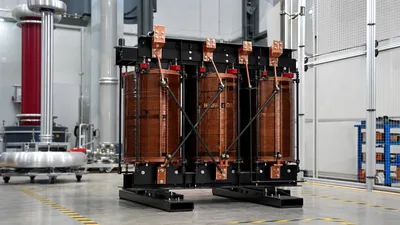
Because a phase converter only generates a third phase at the incoming voltage level (e.g., converting 240V 1-phase into 240V 3-phase delta), a step-up transformer must be integrated into the system. As documented in our 480V 3-phase power guide, the optimal sequence is to convert phase first, then transform voltage. Installing a dedicated dry-type transformer downstream of the phase converter steps up the balanced 240V 3-phase delta output to 480V/277V or 400V/230V three-phase four-wire wye.
Sizing the step-up dry-type transformer requires calculating total system apparent power in kVA: add 20% to 25% safety headroom to account for harmonics generated by power electronics or continuous converter idling losses, complying with IEC 60076-11 clause 14 for dry-type unit thermal performance.
Technical comparison: Phase conversion methods compared
Selecting the optimal method to change single-phase to three-phase requires balancing capital expenditure, electrical efficiency, and power quality. The following comparison table outlines the engineering tradeoffs across typical installations:
| Conversion Method | Efficiency (%) | Voltage Balance (%) | Starting Inrush Capacity | Suitability for Multi-Loads | Primary Application |
|---|---|---|---|---|---|
| Static Phase Converter | 85% - 90% | Poor (> 10% under varying load) | Low (1.0x motor FLA) | No | Light-duty, fixed-load machinery (e.g., manual drill press) |
| Rotary Phase Converter (RPC) | 88% - 92% | Moderate (2% - 5%) | High (3.0x - 4.0x FLA) | Yes | Machine shops, multi-motor woodworking workshops, lifts |
| Digital Solid-State Converter | 95% - 98% | Excellent (< 1% - 2%) | Medium (1.5x - 2.0x FLA) | Yes | CNC machining centres, robotics, automated packaging systems |
| Variable Frequency Drive (VFD) | 94% - 97% | Excellent (< 1%) | High (Soft-start controlled) | No (Single motor only) | Pumps, ventilation fans, industrial conveyors, mixers |
| Utility Substation Drop | 98% - 99% | Utility Standard (< 1%) | Extremely High (Grid-tied) | Yes | Continuous process manufacturing plants (> 100 kW loads) |
Sizing calculation and electrical protection rules
When planning how to make 3 phase power from single phase, electrical engineers must calculate the dramatically higher single-phase input amperage required to deliver three-phase power. Energy conservation dictates that input real power must equal output real power plus system losses.
To calculate single-phase input current ($I_{1\phi}$):
$$I_{1\phi} = \frac{P_{\text{output (kW)}} \times 1000}{V_{1\phi} \times \text{PF} \times \eta}$$
Consider an industrial workshop operating a 15 kW three-phase motor load at 400V, with an efficiency ($\\eta$) of 0.90 and an overall power factor (PF) of 0.85, powered from a 230V single-phase feed via a digital converter:
$$I_{1\phi} = \frac{15 \times 1000}{230 \times 0.85 \times 0.90} = \frac{15000}{175.95} \approx 85.25\text{ A}$$
In accordance with NEC Article 455.6(A), single-phase supply conductors feeding a phase converter must have an ampacity not less than 125% of the phase converter's rated single-phase input current. Applying this mandatory design multiplier:
$$\text{Minimum Conductor Ampacity} = 85.25\text{ A} \times 1.25 = 106.56\text{ A}$$
Engineers must specify a minimum copper cross-sectional area of 35 mm² (2 AWG rated for 75°C terminals) and upstream thermal-magnetic circuit protection rated at 110A or 125A. For complex system calculations, consult our 3-phase calculator guide to determine wire gauge and kVA derating curves.
Step-by-step procedure: Installing and commissioning phase conversion equipment
Commissioning phase conversion equipment requires rigorous field testing to verify voltage balance, insulation resistance, and phase sequencing before energising critical downstream loads:
- Isolate and Lock Out Power: De-energise the incoming single-phase utility panel, verify zero energy state with an approved two-pole voltage detector, and establish lock-out/tag-out (LOTO) procedures.
- Verify Upstream Supply Capacity: Inspect the distribution board to ensure the utility supply transformer, service drop conductors, and main disconnect switch can sustain the 125% continuous single-phase current draw calculated above without excessive line-drop.
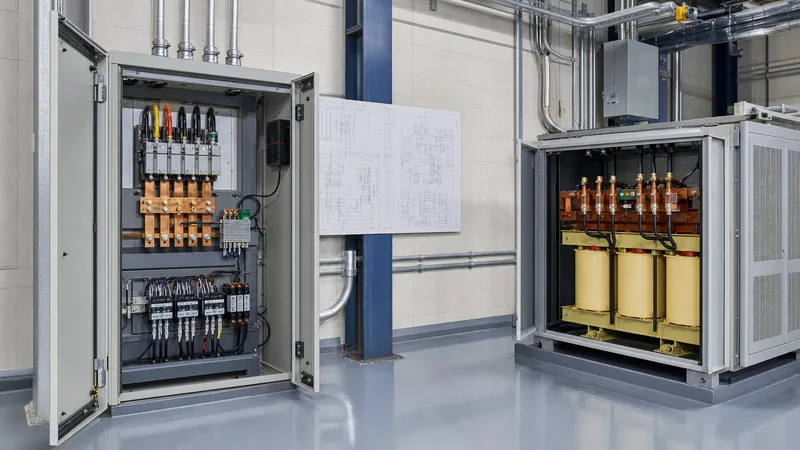
- Mount Conversion and Transformation Hardware: Secure the phase converter and dry-type step-up transformer on vibration-damping pads in a well-ventilated, clean enclosure adhering to standard indoor enclosure ratings minimum.
- Perform Megohmmeter Insulation Checks: Test insulation resistance between all windings and ground using a calibrated 1000V DC insulation tester; readings must exceed 100 MΩ per IEEE standard 43.
- Wire Phase Conductors and System Ground: Terminate single-phase L1, L2, and Protective Earth (PE) to the converter input. Connect the converter output (L1, L2, and synthetic L3) to the step-up transformer primary terminals. Ensure neutral bonding complies with local grounding standards.
- Check Phase Sequence and Balance: Energise the system with downstream machinery disconnected. Measure line-to-line voltages across all phase pairs with a True-RMS multimeter. Verify voltage balance is within 2%, and verify clockwise phase rotation using a handheld phase rotation meter.
- Load Energisation and Thermal Baseline: Progressively apply load to downstream machinery whilst logging phase balance, running currents, and transformer winding temperatures using an infrared thermal imager.
Next steps: specifying and sourcing
Designing an effective phase conversion and voltage step-up distribution scheme requires precise calculations of continuous load, inrush peaks, and ambient installation conditions. When preparing equipment tenders, compile motor nameplate data, duty cycles, and single-phase supply capacity. Our engineering team designs and manufactures high-efficiency dry-type transformers and fully engineered oil-immersed transformers engineered to IEC and IEEE standards to match synthetic three-phase systems seamlessly. To evaluate your site configuration and obtain a comprehensive technical proposal, submit your single-line diagram and load schedule directly to our specialists via our transformer quotation page.
Frequently asked questions
how to change single phase to three phase
You change single-phase to three-phase power by using a variable frequency drive (VFD), a rotary phase converter, or a digital solid-state converter. These devices rectify or mechanically generate an alternating third phase 120 electrical degrees apart from the single-phase input.
how to make three phase from single phase
You make three-phase from single-phase using an electronic inverter circuit or a rotating induction generator. Electronic converters rectify single-phase AC to DC before switching it back into three sine waves, whereas rotary converters use an idler motor stator to induce the third synthetic phase.
how to get 3 phase from single phase
To get three-phase from single-phase, determine your total horsepower or kVA load and select either a VFD for isolated motors or a rotary/digital converter for multiple loads. If higher voltage is required, pair the converter with a step-up dry-type transformer.
how to get three phase power from single phase
You get three-phase power from single-phase by installing a digital phase converter or a rotary phase converter sized at 1.5 to 2 times your largest motor. The unit takes standard single-phase mains electricity and synthesizes a balanced three-wire or four-wire three-phase output.
how to get 3 phase power from single phase
Getting 3-phase power from a single-phase supply involves installing a phase conversion unit connected to a dedicated single-phase breaker sized at 125% of load current. For single-motor applications, a VFD is the most compact and energy-efficient solution available.
how to make 3 phase power from single phase
You make 3-phase power from single-phase by passing the single-phase utility through an idler motor system or an IGBT-based digital phase converter. The converter maintains balanced 120-degree phase separation across lines to drive three-phase industrial motors without mechanical overheating.
Tags: three phase conversion phase converters dry-type transformers motor power supply voltage conversion