Key takeaways
- Typical wall mounted battery storage units hold 5 to 15 kWh at 48 V or 100 to 400 V, weigh roughly 50 to 150 kg and need a structural wall.
- A common 3U rack module is 51.2 V, 100 Ah LFP, storing about 5.12 kWh, so a 15 kWh bank needs three modules in parallel.
- NFPA 855 and the IRC limit residential ESS units to 20 kWh each and aggregate capacity by location, commonly 40 kWh indoors and 80 kWh in garages or outdoors.
- Batteries for homes should carry UL 9540 system listing with UL 1973 or IEC 62619 cell and module certification and UL 9540A fire test data.
- Above roughly 80 kWh or for three-phase commercial loads, a factory-integrated cabinet of 93 to 372 kWh is usually simpler than a large rack bank.
Quick answer: A wall mounted battery is a self-contained lithium unit, usually 5–15 kWh, hung on a wall with its BMS and often an inverter built in. A battery rack system stacks 19-inch modules of about 5 kWh each in an open rack or cabinet. Wall units suit tidy single-home installs; racks suit larger or expandable banks where floor space and serviceability matter.
Residential battery backup and small solar storage have settled into two physical formats. One is the sealed wall unit, styled like an appliance. The other is the battery rack, borrowed from telecom and data-room practice, where standard modules slide into a frame. Both normally use lithium iron phosphate cells, but they differ in how they scale, how they are installed and how they are serviced.
This guide is for installers, homeowners with technical backgrounds and small commercial buyers comparing a wall mount solar battery with a solar battery rack. It covers capacities, voltages, code limits, mounting loads and a sizing example, then explains when a project outgrows both and needs a commercial cabinet.
What Is a Wall Mounted Battery?
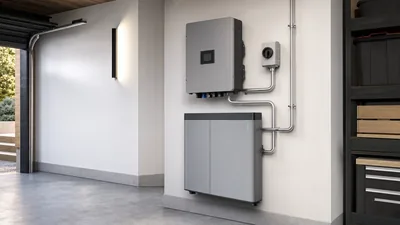
A wall mounted battery is an enclosed energy storage unit designed to hang on a wall bracket, combining cells, battery management system, protection and often a hybrid inverter in one housing. Units sold as wall mounted battery backup are typically rated 5–15 kWh, with continuous output from about 3 to 10 kW.
Two electrical architectures dominate:
- Low voltage (48 V nominal, 51.2 V for 16-cell LFP): paired with a separate 48 V hybrid or off-grid inverter. Currents are high, so short, heavy DC cables and correct fusing matter.
- High voltage (roughly 100–400 V DC): modules stacked in series inside one or several housings, paired with an HV hybrid inverter. Lower current, higher efficiency and smaller cables, but a more restricted inverter match.
Wall-hung lithium units are popular because they are compact, sealed (often IP55 to IP65 for outdoor variants per IEC 60529) and look finished in a garage or utility room. The trade-offs are weight, which can exceed 100 kg for a single 10–15 kWh unit, limited expansion, and replacement of the whole unit rather than a module if something fails.
For the cell chemistry behind most of these products, see LiFePO4 vs lithium-ion, and for picking the DC bus voltage, solar battery voltage: 12 V, 24 V or 48 V.
Wall formats also limit cable bend radius and access space beneath the unit, so plan conduit entries and the DC disconnect position before fixing the bracket.
What Is a Battery Rack System?
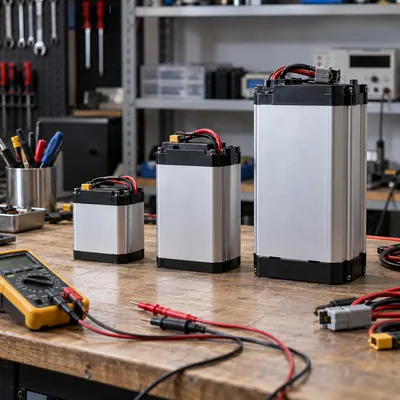
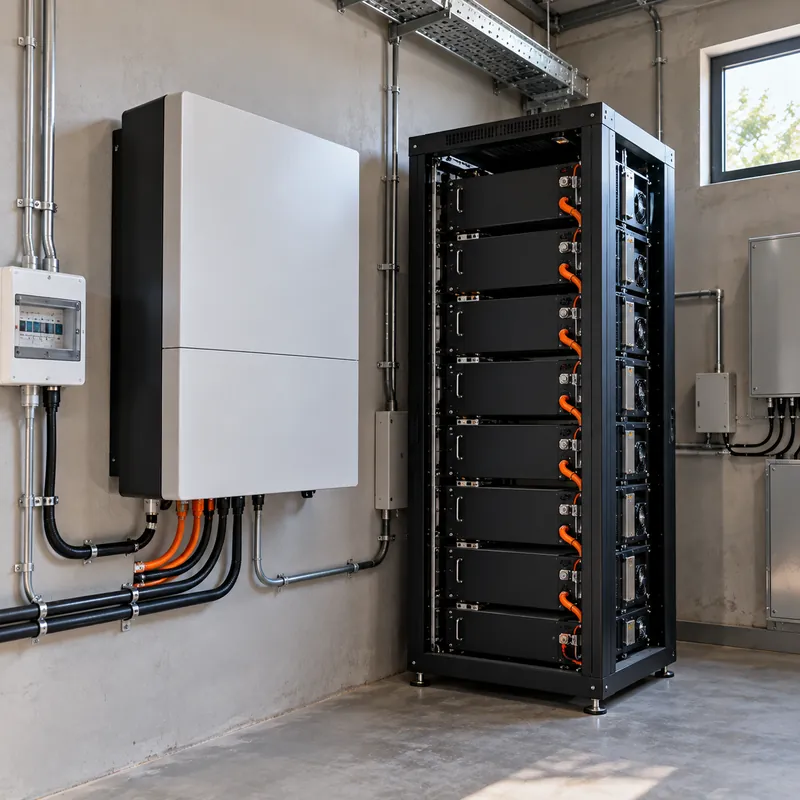
A battery rack system is a frame or enclosed cabinet that holds multiple standard battery modules, wired in parallel or series, with a shared busbar or cable harness and a master BMS. The most common format follows 19-inch rack dimensions, with 2U to 4U modules of 2.4–5.12 kWh each.
Variants you will see:
- Open battery rack storage: a steel frame in a dedicated battery room or plant room, with modules exposed for ventilation and inspection.
- Battery rack cabinet: an enclosed, lockable cabinet, sometimes NEMA 3R or IP54 for outdoor use, with cable entries, a DC breaker and a door.
- Stacked floor modules: interlocking modules that sit on a base plate without a frame, a hybrid between wall and rack formats.
A rack for batteries scales cleanly. Adding a module adds capacity and, in a parallel 48 V bank, current capability. Most manufacturers limit parallel strings to a stated maximum (often 8–16 modules) because current sharing and BMS communication become harder beyond that. Mixing old and new modules is also limited; a new module added years later will cycle differently from aged ones.
Rack systems are easier to service: a faulty module can be isolated and swapped. They do need floor space, clearance for airflow and, in commercial settings, protection against seismic and impact loads. The design of protective enclosures is covered in our battery enclosure engineering guide.
Wall Mounted Battery vs Battery Rack: Side-by-Side Comparison
| Factor | Wall mounted battery | Battery rack system |
|---|---|---|
| Typical capacity per unit | 5–15 kWh | 2.4–5.12 kWh per module, 10–80 kWh per rack |
| Voltage | 48 V or 100–400 V DC | Mostly 48 V parallel; HV racks also available |
| Footprint | Zero floor space; needs wall area and structure | Floor footprint about 0.3–0.6 m² per rack |
| Weight handling | One heavy lift, often 2 people or a lifting aid | Modules of 40–50 kg lifted individually |
| Expansion | Add whole units, limited by inverter | Add modules up to BMS limit |
| Serviceability | Usually whole-unit replacement | Module-level swap |
| Ingress protection | Often IP55–IP65, outdoor capable | Open racks IP20; cabinets IP54 or NEMA 3R |
| Best fit | Single-family homes, small retrofit | Off-grid cabins, small commercial, telecom, labs |
Neither format is inherently safer. Safety depends on the listing, the BMS, installation clearances and the room. Look for UL 9540 system listing in North America, UL 1973 or IEC 62619 at module level, and UL 9540A test data that the authority having jurisdiction can review. Fire behaviour of lithium cells and suppression options are discussed in lithium battery fire suppression.
A practical rule: if the bank will stay below about 20 kWh and the site wants a clean finish, choose wall units. If it will grow, needs module-level service or sits in a plant room, choose a rack.
How Do You Size Residential Battery Backup?
Sizing starts from the loads that must run during an outage, not from the battery catalogue.
- List critical loads with running watts and hours per day: refrigerator, lighting, network equipment, well pump, furnace blower, medical devices.
- Calculate daily energy:
E_load = Σ (P × h)in kWh. - Choose autonomy, the number of days without recharge, typically 0.5–2.
- Convert to nameplate:
E_battery = E_load × days / (DoD × η_inverter). - Check power: the battery's continuous discharge and the inverter's continuous and surge rating must cover the largest simultaneous load and motor starts.
- Check DC current:
I_DC = P_AC / (V_DC × η).
Worked example: critical loads total 12 kWh per day, autonomy is 1 day, usable depth of discharge is 90% and inverter efficiency 95%.
E_battery = 12 × 1 / (0.90 × 0.95) = 14.0 kWh
Options: three 5.12 kWh rack modules (15.36 kWh) or two 7.5 kWh wall units (15 kWh). With a 6 kW, 48 V inverter, DC current at full output is 6,000 / (51.2 × 0.95) = 123 A. Three parallel modules share about 41 A each, well within a typical 100 A module rating; two wall units share about 62 A each.
For larger home systems, see the 10 kWh battery guide and the broader residential energy storage engineering guide.
Code Limits and Installation Requirements
Installation rules decide where either format can go. In the US, residential energy storage is governed by NFPA 855, IRC Section R328 where adopted, and NEC Article 706 for the electrical connection. Commonly applied residential limits are:
| Location | Typical aggregate ESS limit |
|---|---|
| Any single ESS unit | 20 kWh |
| Utility closets, basements, storage spaces | 40 kWh |
| Attached or detached garages, outdoors on exterior walls | 80 kWh |
| Habitable rooms, sleeping areas | Not permitted |
Check the edition adopted locally, as these thresholds and spacing rules (commonly about 3 ft or 914 mm between units unless test data justify less) have changed between editions. Smoke or heat detection, impact protection from vehicles in garages, and a clearly labelled disconnect are frequent requirements.
Mounting checks for wall units:
- Confirm wall structure: fix into studs, solid masonry or a backer board rated for the unit's weight with a safety factor.
- Keep manufacturer clearances above and to the sides for heat dissipation.
- Avoid direct sun on outdoor units; high cell temperature shortens life.
- Route DC cables with correct fusing per NEC 706 and the inverter manual.
Installation and any connection to service equipment must follow local code and be carried out by a licensed electrician. The full installer workflow is covered in our solar battery installation guide.
When Should You Move Beyond Wall and Rack Batteries?
Small formats work well up to tens of kWh. Several signs indicate a project has outgrown them:
- Capacity above about 80 kWh, where residential code limits and parallel module counts become restrictive.
- Three-phase loads at 208 V, 400 V or 480 V, such as workshops, farms, clinics and small factories.
- Commercial duty cycles such as daily peak shaving, demand charge control or participation in demand side response programs.
- Thermal stress: rooms that exceed 35 °C in summer, where passive cooling of modules is inadequate.
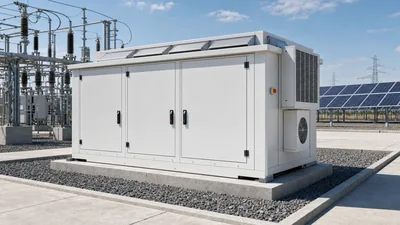
At this point a factory-integrated C&I cabinet is usually simpler than a large rack bank. A liquid-cooled cabinet holds 93–372 kWh with its BMS, thermal management, fire detection and suppression and PCS integrated and tested as one system. Liquid cooling keeps cell temperature spread tight, which extends cycle life under daily cycling; the trade-offs are explained in liquid-cooled vs air-cooled energy storage.
Portable units sit at the opposite end of the scale. If a project began with portable equipment and is now running daily, compare options in portable power station vs BESS.
Next Steps: Specifying and Sourcing Battery Storage
Whichever format you choose, a short specification avoids mismatched equipment:
- Daily critical-load energy and peak kW, with motor starting loads
- Required autonomy and backup versus self-consumption priority
- DC bus voltage and inverter compatibility list
- Installation location, ambient range and required IP or NEMA rating
- Certifications: UL 9540, UL 1973 or IEC 62619, UL 9540A data, and NFPA 855 compliance
- Warranty basis: years, cycles and end-of-warranty retained capacity
MARS does not supply residential wall units or small rack modules. For commercial and industrial sites that have moved beyond them, MARS manufactures LFP liquid-cooled C&I cabinets from 93 to 372 kWh and containerised systems from 500 kWh to 10 MWh with PCS, BMS/EMS and fire suppression, plus the transformers and switchgear to connect them. See the energy storage system range.
Send your load profile and site constraints through the quote request page for a sized C&I storage proposal.
Frequently asked questions
How much does a wall mounted battery weigh?
A wall mounted lithium battery of 5 kWh typically weighs around 45 to 60 kg, while 10 to 15 kWh units can weigh 100 to 150 kg. The wall and bracket must be rated for that load with a safety margin, and installers often need two people or a lifting aid. Check the unit's datasheet for the exact mass and fixing pattern.
Is a rack battery better than a wall mounted battery?
Neither is better in general. Rack systems scale and service more easily because modules can be added or swapped individually, which suits larger or growing banks. Wall units save floor space, are often sealed for outdoor use and look tidier in homes. Choose based on capacity, expansion plans, location and inverter compatibility.
How many kWh do I need for residential battery backup?
Add the daily energy of the loads you want to keep running, multiply by the days of autonomy, and divide by usable depth of discharge and inverter efficiency. For example, 12 kWh of critical loads for one day at 90 percent depth of discharge and 95 percent efficiency needs about 14 kWh of nameplate capacity.
Can a wall mount solar battery be installed outdoors?
Yes, if it carries a suitable outdoor ingress rating such as IP55, IP65 or NEMA 3R and is installed within its rated temperature range. Avoid direct afternoon sun, keep clearances, and protect it from vehicle impact. Local code, often based on NFPA 855 and the IRC, also sets location and spacing rules.
What is a battery rack cabinet?
A battery rack cabinet is an enclosed, lockable frame that holds multiple battery modules with shared busbars, a DC breaker and cable management. It protects modules from dust, contact and tampering, and outdoor versions are rated NEMA 3R or IP54. It is common in telecom, small commercial and off-grid installations.
How many battery modules can be connected in parallel?
The limit is set by the battery manufacturer and typically falls between 8 and 16 modules per bank, depending on BMS communication and current sharing. Exceeding it can cause unequal current, BMS faults or void the warranty. For larger banks, use multiple banks on separate inverter inputs or move to a high-voltage or commercial cabinet system.
Written and reviewed by the MARS application engineering team in Shanghai, who specify and test transformers, switchgear, substations and battery storage for projects in 40+ countries. Last updated .
Tags: wall mounted battery battery rack system residential battery backup battery rack cabinet wall mounted battery storage