Key takeaways
- FR3 transformer oil is a 100% vegetable-oil-based natural ester dielectric fluid classified as a K3 fire-safe fluid under IEC 61039 with a fire point exceeding 360 °C.
- Unlike mineral oil, natural ester fluids chemically extract moisture from solid insulation paper via transesterification, potentially extending insulation paper life by a factor of three to four under standard thermal loading.
- Under NFPA 70 (National Electrical Code Article 450.23) and FM Global guidelines, using natural ester fluids allows reduced clearances to building walls and eliminates expensive deluge water-spray systems.
- The initial purchase price of FR3 transformer oil is typically two to three times that of standard naphthenic mineral oil, but overall project costs decrease due to simplified civil fire containment and lower insurance premiums.
- Retrofilling existing mineral-oil-filled transformers with natural ester liquid requires strict verification of gasket compatibility (such as fluoropolymer or nitrile rubber limits) and sealing against continuous air contact to prevent oxidation.
Quick answer: FR3 transformer oil is a biodegradable, high-fire-point natural ester dielectric coolant manufactured from renewable plant seeds. Classified as a Less-Flammable (K-class) liquid with a fire point above 360 °C, it significantly reduces substation fire risk, prevents cellulose insulation degradation by scavenging water, and allows transformer operation at higher temperature rises in compliance with IEC and IEEE standards.
As power densities rise and substations encroach closer to urban infrastructure, industrial facilities, and renewable generation assets, conventional mineral-oil-filled transformers present increasing civil and thermal liabilities. Traditional mineral oil has a fire point of approximately 160 °C to 170 °C, requiring extensive fire barriers, separation walls, and secondary containment systems. In contrast, modern installations using an oil-immersed transformer charged with natural ester fluid achieve superior environmental compliance and enhanced overload capability while simplifying civil engineering requirements.
What Is FR3 Transformer Oil and Natural Ester Fluid Chemistry?
A natural ester dielectric fluid is a formulated insulating oil derived entirely from vegetable seed oils, primarily soybean oil, combined with performance-enhancing oxidation inhibitors. Chemically, fr3 transformer oil consists of triglycerides—molecules in which three fatty acid chains are chemically bonded to a glycerol backbone. This tri-ester structure differs fundamentally from conventional mineral oil, which consists of complex petroleum hydrocarbons (paraffins, naphthenes, and aromatics).
The triglyceride structure gives natural esters two distinctive functional properties: exceptional thermal stability and elevated polarity. The polarity allows the fluid to absorb substantial quantities of dissolved water without sacrificing dielectric breakdown strength. Where conventional mineral oil saturates at roughly 55 parts per million (ppm) of dissolved moisture at 20 °C, natural ester fluid can hold upwards of 1,000 ppm to 1,100 ppm before reaching saturation. Standard specifications for natural ester fluids are governed internationally by IEC 62770 (Fluids for electrotechnical applications – Unused natural esters) and in North America by ASTM D6871 and IEEE C57.147. For engineering teams evaluating fluid options, understanding these fundamental molecular differences clarifies why ester fluids behave differently under thermal, electrical, and environmental stress as detailed in our oil filled transformer engineering guide.
Technical Specifications: FR3 Transformer Oil vs Mineral Oil
Comparing natural ester fluid against standard uninhibited or inhibited mineral oil reveals major differences in fire safety, viscosity, and moisture tolerance. The table below outlines key baseline physical and dielectric parameters measured in accordance with IEC and ASTM test methods.
| Property (Units) | Test Method | Standard Mineral Oil | FR3 Natural Ester Oil |
|---|---|---|---|
| Fire Point (°C) | ASTM D92 / ISO 2592 | 160 – 175 | ≥ 360 |
| Flash Point (°C) | ASTM D92 / ISO 2592 | 145 – 160 | 310 – 330 |
| Fire Classification | IEC 61039 | O1 (< 300 °C) | K3 (> 300 °C, non-propagating) |
| Dielectric Breakdown (kV, 2.5 mm) | IEC 60156 / ASTM D1816 | 40 – 70 | 65 – 85 |
| Kinematic Viscosity at 40 °C (mm²/s) | ISO 3104 / ASTM D445 | 9.0 – 11.0 | 32.0 – 35.0 |
| Kinematic Viscosity at 100 °C (mm²/s) | ISO 3104 / ASTM D445 | 2.0 – 3.0 | 7.5 – 8.5 |
| Pour Point (°C) | ISO 3016 / ASTM D97 | -40 to -30 | -24 to -18 |
| Moisture Saturation at 20 °C (ppm) | ASTM D1533 / IEC 60814 | ~55 | ~1,050 |
| Biodegradability (% in 28 days) | OECD 301B | < 30 (non-readily) | > 95 (readily biodegradable) |
While natural ester oil exhibits a higher kinematic viscosity at ambient temperatures, modern winding and duct designs maintain effective natural convection cooling. Crucially, the breakdown voltage remains stable even as the fluid absorbs ambient or cellulose-generated moisture, simplifying moisture monitoring protocols outlined in our transformer oil testing standards guide.
Fire Safety and Clearance Reductions: NEC, NFPA, and Insurance Rules
Natural ester fluid eliminates the catastrophic explosion and pool fire hazards associated with low-flash-point mineral oil installations. Under NFPA 70 (National Electrical Code, Article 450.23), a transformer filled with an approved Less-Flammable Liquid having a fire point of not less than 300 °C is permitted to be installed indoors without a fire-rated vault, provided it is equipped with liquid-confinement areas and proper overcurrent protection.
For outdoor substations, major commercial insurers such as FM Global (Property Loss Prevention Data Sheets 5-4) allow dramatic reductions in spatial clearance between transformers and building walls or adjacent electrical gear:
- Clearance to non-combustible walls: Standard mineral oil units typically require separation distances of 7.6 m to 15 m (25 ft to 50 ft) or 2- to 3-hour fire-rated barrier blast walls. A transformer filled with fr3 transformer oil reduces this mandated clearance to as little as 1.5 m (5 ft) without a fire wall.
- Suppression systems: Automatic water-spray deluge systems can often be omitted entirely when using natural ester liquids, removing substantial plumbing, drainage, and pumping maintenance overhead.
- Secondary containment: Because natural esters are non-toxic in aquatic environments and classified as readily biodegradable according to OECD 301B standards, environmental containment basins can be simplified depending on local catchment and regional environmental regulations.
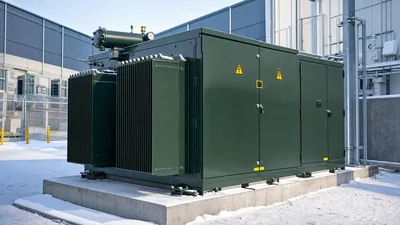
For dense urban substations, utility networks, and distributed commercial installations using a pad-mounted transformer, these clearance exemptions free up valuable land footprint and reduce overall civil works expenditure.
Transformer Lifespan and Thermal Loading under IEC 60076-14
The chemical interaction between natural ester fluids and Kraft insulation paper fundamentally extends solid insulation life. In conventional transformers, water acts as a primary catalyst for cellulose chain scission, decreasing the degree of polymerisation (DP) over time until the insulation becomes brittle. However, triglyceride molecules possess a high chemical affinity for water; they transesterify with hydroxyl groups on the cellulose and continuously draw moisture out of the solid paper into the liquid phase.
By keeping the paper dry throughout the asset's operating cycle, natural ester fluid extends solid paper thermal lifespan by a factor of 300% to 400% compared to mineral oil systems operating at identical temperatures. Standards including IEC 60076-14 (Power transformers – Liquid-immersed power transformers using high-temperature insulation materials) and IEEE C57.154 formalise this advantage by permitting elevated top-oil and winding temperature rises:
- Standard thermal limits for Kraft paper in mineral oil: 65 °C average winding rise, 80 °C hot-spot rise.
- Permitted thermal limits for thermally upgraded Kraft paper in natural ester: up to 85 °C average winding rise, 95 °C to 110 °C hot-spot rise with high-temperature solid insulation systems.
This allows electrical engineers to uprate an existing transformer design's continuous power capacity by 15% to 20% without enlarging the core or tank dimensions, or alternatively run higher short-term peak overloads without sacrificing asset longevity.
Retrofilling and Maintenance: Handling FR3 Transformer Oil
Retrofilling existing mineral-oil-filled equipment with natural ester fluid is an established strategy to upgrade fire safety and extend substation capacity without replacing transformer tanks. However, natural ester fluid is vulnerable to oxidation when exposed continuously to free air at elevated temperatures. Consequently, ester fluids are best deployed in sealed-tank designs or units equipped with nitrogen blanket systems or conservator rubber diaphragms.
- Perform condition assessment: Test the existing mineral oil and paper insulation. Verify that the transformer does not exhibit active internal partial discharge, high DGA (dissolved gas analysis) fault gases, or advanced cellulose embrittlement (DP < 250).
- Verify material compatibility: Check all gasket materials and auxiliary valves. Standard nitrile rubber (NBR) exhibits slight swelling in natural esters; Viton, fluorocarbon elastomers, and silicone seals provide optimal long-term compatibility. Ensure internal paints and adhesives are ester-compatible.
- Drain and flush the unit: Drain the mineral oil thoroughly while the unit is warm. Vacuum-drain pockets, core-coil assemblies, radiators, and tap changers. A secondary flush with natural ester liquid is recommended to achieve an unblended residual mineral oil content below 3% to 5% by volume, ensuring the retained liquid maintains its >300 °C K-class fire point.
- Vacuum filling and degasification: Apply a deep vacuum (typically < 1 mbar for power transformers) prior to introducing the fluid. Because natural ester has higher viscosity, oil introduction must proceed slowly, ensuring complete impregnation of the solid paper matrix. Follow strict purification and degasification practices as outlined in our comprehensive transformer oil purification guide.
- Final soaking and electrical testing: Allow the transformer to soak for 24 to 48 hours depending on MVA rating. Complete insulation resistance, power factor/dissipation factor (tan delta), and dielectric breakdown testing before re-energisation.
FR3 Transformer Oil Price and Total Cost of Ownership
When planning a substation project, capital equipment buyers must evaluate fluid costs in the context of system-wide capital and operating expenditures. The upfront fr3 transformer oil price generally sits at approximately 2.0 to 3.2 times the cost of virgin naphthenic mineral oil on a per-litre basis. This difference stems from specialised agricultural sourcing, chemical transesterification and purification processes, and rigorous dielectric testing.
However, focusing exclusively on procurement cost per drum or metric tonne obscures the comprehensive financial equation. A complete Total Cost of Ownership (TCO) calculation demonstrates clear net savings across multiple operational categories:
- Civil containment and barriers: Eliminating concrete firewall barriers between three-phase units saves between £15,000 and £40,000 per bay.
- Deluge fire protection: Omitting complex high-velocity water spray piping, diesel fire pumps, and drainage separation basins yields tens of thousands in capital savings.
- Insurance premiums: Property risk underwriters provide tangible liability insurance reductions for indoor and industrial substations using K-class natural esters instead of Class O1 mineral oils.
- Extended asset life: Slowing down cellulose thermal aging delays multi-million-pound capital reinvestment cycles for utility transformers, high-voltage substations, and power transformer assets.
Next steps: specifying and sourcing
Selecting the appropriate dielectric fluid depends on your project's installation environment, clearance constraints, ambient thermal conditions, and utility specifications. Whether you are engineering a high-density urban commercial vault, an offshore wind farm collector platform, or an industrial processing plant, transitioning to natural ester fluid provides a reliable pathway to fire compliance and asset longevity. When requesting an equipment quotation, specify your primary and secondary voltage requirements, BIL ratings, preferred tank sealing method (sealed tank vs conservator), and fluid standard (IEC 62770 or IEEE C57.147). For bespoke engineering support, retrofill evaluations, or competitive pricing on ester-filled distribution and power units, contact our technical team or submit your specifications directly through our transformer quotation portal.
Frequently asked questions
What is the fire point of FR3 transformer oil?
The fire point of FR3 transformer oil is 360 °C (680 °F) or higher, with a flash point exceeding 310 °C. This qualifies it as a K-class Less-Flammable Liquid under IEC 61039 and NFPA 70 standards, compared to conventional mineral oil which ignites around 160 °C to 170 °C.
Can FR3 transformer oil be mixed with mineral oil?
Yes, FR3 transformer oil is completely miscible with conventional mineral oil in all proportions. However, if the mineral oil content in an ester-filled unit exceeds approximately 5% to 7% by volume, the fluid's fire point may drop below the 300 °C threshold required for K-class fire safety certification.
Why is FR3 transformer oil price higher than mineral oil?
The FR3 transformer oil price is roughly 2 to 3 times higher than mineral oil because it is processed from food-grade renewable vegetable oils through specialised transesterification, clay polishing, and purification steps. Despite higher upfront fluid cost, overall project CAPEX is lower due to reduced fire barrier and deluge requirements.
Can you use FR3 oil in cold climates?
Yes, FR3 oil functions reliably in cold climates down to its pour point of -21 °C to -18 °C. For extreme sub-zero installations below -20 °C, IEEE guidelines recommend continuous tank energisation or internal immersion heaters, as natural esters solidify into a non-expanding wax that safely liquefies upon transformer loading without damaging internal components.
How does FR3 transformer oil extend insulation paper lifespan?
FR3 transformer oil extends cellulose paper lifespan by chemically drawing moisture away from the solid insulation. Because natural ester molecules are polar, they transesterify with water molecules generated during normal operation, keeping the Kraft paper dry and slowing cellulose polymer degradation by up to 300% to 400% compared to mineral oil.
Is FR3 transformer oil suitable for free-breathing conservator transformers?
No, FR3 transformer oil is not recommended for free-breathing transformers without an air barrier. Continuous contact with atmospheric oxygen at operating temperatures causes vegetable-based natural esters to oxidise and polymerise, thickening the fluid; it should only be used in hermetically sealed tanks or conservators equipped with rubber bladders.
Tags: fr3 transformer oil fr3 transformer oil price natural ester fluid transformer dielectric fluids transformer maintenance