Key takeaways
- Polychlorinated biphenyls (PCBs) are synthetic aromatic dielectric compounds used before 1979 that are classified as toxic, persistent environmental pollutants.
- Under international environmental rules and IEC 61619, dielectric liquid containing 50 ppm or more of PCBs is legally classified as PCB-contaminated oil.
- Gas chromatography with electron capture detection (GC-ECD) according to ASTM D4059 is the industry benchmark for quantifying PCBs in transformer oil down to 1 ppm.
- Retrofilling a contaminated transformer with modern mineral oil requires strict flushing procedures because core porous insulation retains up to 15 percent residual fluid.
- Modern electrical networks utilise mineral oil, synthetic esters, or natural esters guaranteed to contain zero detectable PCBs from certified manufacturing plants.
Quick answer: PCB transformer oil refers to dielectric insulating fluid containing polychlorinated biphenyls, synthetic chlorinated hydrocarbons banned globally due to environmental persistence, bioaccumulation, and toxicity. Transformers with fluid containing 50 ppm or higher are legally designated as contaminated, requiring strict testing, containment, retrofilling, or certified high-temperature disposal.
For decades, synthetic dielectric liquids formulated with polychlorinated biphenyls (PCBs)—commonly known by trade names such as Askarel—were extensively specified for indoor substations, industrial facilities, and rail networks due to their non-flammable nature and chemical stability. Production ceased internationally following the 1979 ban in the United States and the subsequent Stockholm Convention on Persistent Organic Pollutants. However, thousands of legacy assets and cross-contaminated fleets remain in service worldwide. Understanding environmental thresholds, diagnostic testing methods, retrofilling techniques, and disposal obligations is essential for plant engineers, utility operators, and maintenance teams managing an oil filled transformer fleet.
What is PCB transformer oil and why was it used?
PCB transformer oil is a synthetic dielectric liquid composed of biphenyl molecules reacted with chlorine gas to yield chlorinated aromatic hydrocarbons. Commercial blends typically contained between 40% and 70% chlorine by weight, often blended with trichlorobenzene solvents to lower the fluid's viscosity for optimal thermal convection.
Electrical engineers specified Askarel and PCB-based fluids from the 1930s to the late 1970s primarily for fire protection. Unlike conventional hydrocarbon-based mineral oil, which exhibits a flash point around 140°C and a fire point near 160°C, PCBs do not support combustion. They demonstrate no true flash point under open-cup testing procedures. Furthermore, they resist thermal degradation, withstand high operating temperatures without oxidation, and provide a high dielectric breakdown voltage (>40 kV across a standard 2.5 mm electrode gap). These properties made them the default specification for network assets installed in occupied structures, mines, and densely populated urban commercial vaults.
Despite these engineering advantages, their extreme stability prevents natural metabolic breakdown. When exposed to uncontrolled electrical arcing or elevated fire temperatures (above 600°C), PCBs can thermally decompose into polychlorinated dibenzodioxins (PCDDs) and polychlorinated dibenzofurans (PCDFs), both of which are acute toxins and carcinogens.
Regulatory classifications and concentration limits for pcbs in transformer oil
Regulatory bodies classify electrical equipment into distinct operational categories based directly on the measured concentration of pcbs in transformer oil.
The United States Environmental Protection Agency (under the Toxic Substances Control Act, 40 CFR § 761) and international standards aligned with the Stockholm Convention establish three primary thresholds for liquid-filled assets:
- Non-PCB Transformer: Fluid contains less than 50 parts per million (ppm) or 50 mg/kg of PCBs. Modern units directly delivered from certified manufacturing facilities exhibit non-detectable levels (<1 ppm).
- PCB-Contaminated Transformer: Fluid contains 50 ppm to 499 ppm of PCBs. These units can often continue operating under mandated labeling, visual inspection schedules, and spill-containment provisions until end-of-life.
- PCB Transformer: Fluid contains 500 ppm or greater of PCBs. These units face aggressive phase-out mandates, stringent quarterly leak checks, and explicit prohibitions on servicing that involves opening the tank or rebuilding windings.
The table below summarises the engineering and compliance requirements according to standard concentration brackets.
| Classification | PCB Concentration (ppm / mg/kg) | Standard Fluid Type | Permissible Maintenance & Servicing | Containment & Inspection Mandate |
|---|---|---|---|---|
| Non-PCB | < 50 ppm (frequently < 2 ppm) | Refined mineral oil or synthetic/natural esters | Full rewinding, bushing replacement, standard filtration | Standard baseline facility oil containment |
| PCB-Contaminated | 50 ppm to 499 ppm | Cross-contaminated mineral oil | Routine maintenance permitted; vacuum degasification allowed | Quarterly visual checks; recorded spill protocols |
| PCB Equipment | ≥ 500 ppm | Pure Askarel / PCB blend | Restricted; no rewinding; top-up prohibited | Mandatory secondary containment; EPA/national registration |
Testing procedures for detecting pcbs in transformer oil
Quantitative laboratory diagnostics are required to verify concentration levels because visual inspection, colour analysis, and standard physical checks cannot identify the presence of chlorinated biphenyls.
Comprehensive analysis relies on standardized chromatography rather than rudimentary screening kits. For ongoing electrical condition monitoring, engineers should coordinate this with regular transformer oil testing procedures. Laboratory analysis follows these primary testing standards:
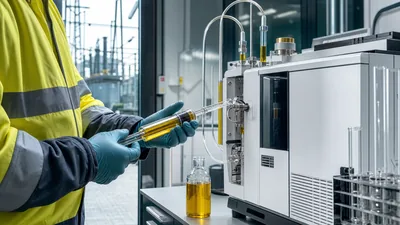
- Gas Chromatography with Electron Capture Detection (GC-ECD): Governed by ASTM D4059 and IEC 61619, this technique vaporises a diluted oil sample and passes it through a capillary chromatography column. The electron capture detector is sensitive to halogenated compounds, separating individual PCB congeners (Aroclor 1242, 1254, 1260) and reporting quantitative total concentration down to 1 ppm accuracy.
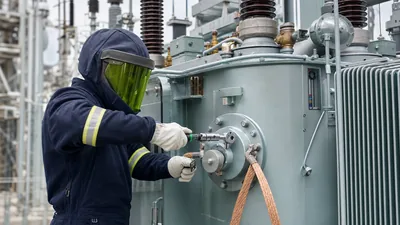
- Screening via Total Organic Halogen (TOH): Field test kits (such as Clor-N-Oil) measure total organically bound chlorine via extraction and colorimetric reaction. While rapid and economical for maintenance personnel, they measure all halogens indiscriminately; false positives occur if chlorinated degreasers or non-PCB solvents entered the tank during previous maintenance.
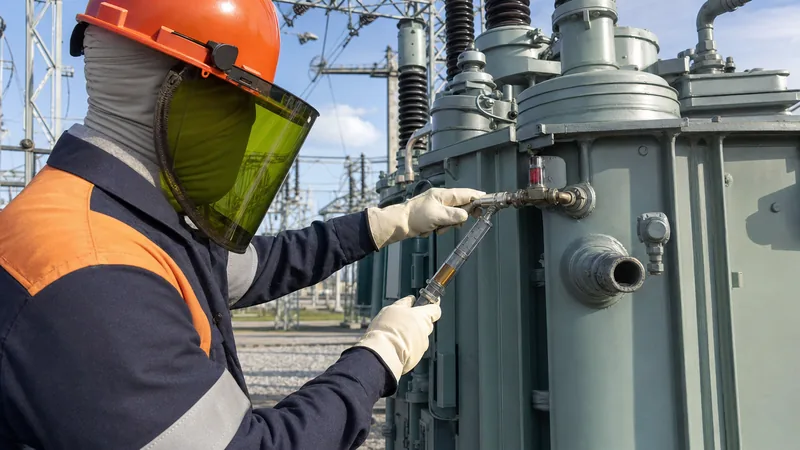
Whenever a field screening test indicates an organic chlorine level near or above 50 ppm, facility managers must dispatch an oil sample to an accredited analytical laboratory for confirmatory GC-ECD testing before initiating decontamination or filing regulatory notices.
Decontamination, retrofilling, and disposal methods
Managing PCB-contaminated electrical assets requires systematic remediation protocols to prevent the dispersion of toxic compounds into the environment.
When an asset tests positive for PCB contamination, plant engineers typically evaluate three engineering pathways:
- Fluid Retrofilling: The transformer is drained, flushed, and refilled with virgin uninhibited or inhibited mineral oil meeting IEC 60296. However, retrofilling does not yield immediate reclassification. The cellulose winding insulation and wooden core clamps act as sponges, absorbing 10% to 15% of the internal fluid volume. Over several months of thermal cycling, residual PCBs leach back into the new oil. Under standard regulations, an asset cannot be legally reclassified down to non-PCB status until it has operated for at least 90 continuous days at standard operating temperatures (≥50°C) and subsequent laboratory testing proves the fluid remains below 50 ppm.
- On-Site Chemical Dehalogenation: For large transmission and industrial units, mobile chemical rigs treat the oil while the transformer is energized or de-energised. Sodium-based reagents react with chlorine atoms to produce inert sodium chloride and polyphenyl polymers. This process can be integrated into broader transformer oil purification workflows, reducing PCB levels below 2 ppm without discarding the dielectric fluid.
- High-Temperature Incineration and Scrap Disposal: Units holding pure PCB dielectric fluid (above 500 ppm) scheduled for decommissioning cannot be disposed of through conventional scrap channels. The fluid must undergo thermal destruction in certified high-temperature rotary kilns operating above 1200°C with a 2-second residence time to prevent dioxin formation. The empty tank and core laminations require chemical solvent washing or thermal decon furnaces until residual contamination meets national release criteria.
Cross-contamination risks during site maintenance
A significant proportion of mineral oil assets operating today with 50 to 100 ppm PCB concentrations were never filled with Askarel at the factory; they were cross-contaminated during historical maintenance operations.
Between 1950 and 1980, utility servicing teams frequently shared mobile oil tankers, hoses, pumps, and vacuum degasifiers between Askarel-filled indoor transformers and outdoor mineral-oil distribution banks. Residual PCB fluid clinging to filtration equipment interiors easily tainted thousands of litres of uncontaminated mineral oil. A dilution of merely 1 litre of Askarel containing 60% PCB into a 10,000-litre mineral oil reservoir yields a concentration of 60 ppm, immediately shifting the entire asset into regulated status.
Modern field maintenance protocols require dedicated fluid-handling lines, distinct hoses, and pre-testing of bulk delivery tankers before executing any top-up, filtration, or reclamation project on substation assets.
Modern dielectric fluids: PCB-free alternatives
Modern electrical distribution and transmission assets rely exclusively on environmentally stable, non-toxic dielectric fluids manufactured to strict purity standards.
Plant designers specifying new substations can select from three primary fluid categories that completely eliminate PCB liabilities:
- Inhibited and Uninhibited Mineral Oils: Highly refined naphthenic or paraffinic hydro-treated mineral oils adhering to IEC 60296 or ASTM D3487, delivering reliable dielectric performance, low viscosity, and proven heat dissipation at an economical cost.
- Synthetic Ester Fluids: Manufactured in accordance with IEC 61099, synthetic pentaerythritol esters provide an elevated fire point (>300°C, K-class fluid) and high moisture tolerance, suitable for traction, underground mining, and offshore platforms.
- Natural Ester Liquids (Vegetable Oils): Derived from soybean or canola seeds according to IEC 62770 or ASTM D6871, natural esters are fully biodegradable, non-toxic, and exhibit superior thermal resistance, extending paper insulation life.
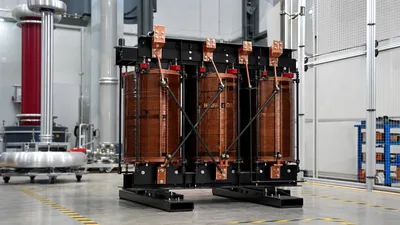
For high-density indoor installations where fire safety was once the core reason for choosing PCBs, engineers now routinely specify dry-type cast resin units or fire-resistant ester-filled transformers instead of hazardous legacy fluids.
Next steps: specifying and sourcing
When specifying replacement equipment for decommissioned PCB units or purchasing brand-new substation assets, engineers must demand full material declarations verifying that dielectric liquids are 100% PCB-free (<1 ppm detection limit). Our manufacturing facility supplies factory-tested oil-immersed transformers, heavy-duty power transformers, and cast-resin units built to IEC 60076 and IEEE C57 standards. To discuss equipment specifications, decommission upgrades, or to receive a comprehensive project tender, submit your primary voltage, secondary voltage, rating (kVA/MVA), and site fluid preferences directly via our transformer quote page.
Frequently asked questions
what is pcb transformer oil
PCB transformer oil is synthetic dielectric insulating fluid blended with polychlorinated biphenyls to deliver exceptional heat resistance and fire prevention. Used widely until the late 1970s, it is now globally banned due to severe environmental persistence, toxicity, and carcinogenic breakdown products.
what ppm of pcb is considered contaminated
Dielectric fluid containing 50 parts per million (ppm) or greater is legally designated as PCB-contaminated by the US EPA and international environmental regulators. Concentrations at or exceeding 500 ppm place the equipment into the highest regulatory bracket as a fully regulated PCB transformer.
how do you test for pcbs in transformer oil
Testing is primarily conducted using Gas Chromatography with Electron Capture Detection (GC-ECD) following ASTM D4059 or IEC 61619 standards. While on-site chemical screening kits can detect total chlorine, laboratory GC-ECD is required to quantify individual PCB congeners accurately down to 1 ppm.
can pcb contaminated transformer oil be cleaned
Yes, PCB-contaminated mineral oil can be remediated through on-site chemical dehalogenation using sodium reagents, which break the chlorine bonds without destroying the oil. Alternatively, retrofilling the transformer with fresh oil can reduce levels, though residual leaching from cellulose winding insulation requires monitoring.
why were pcbs banned in transformers
PCBs were banned because they resist natural environmental degradation, bioaccumulate in animal and human tissues, and cause serious health issues including cancer and endocrine disruption. Furthermore, when exposed to electrical fires, PCBs can convert into highly toxic polychlorinated dibenzodioxins and dibenzofurans.
are modern transformers completely free of pcbs
Yes, modern transformers are manufactured with virgin refined mineral oil, natural esters, or synthetic esters certified to have non-detectable PCB levels below 1 ppm. Quality factories enforce strict supply-chain controls and provide certified analytical test certificates confirming zero PCB content with every unit.
Tags: pcb transformer oil pcbs in transformer oil transformer maintenance dielectric fluid transformer safety