Key takeaways
- Diesel generators burn a significant no-load fuel share, so a set running at 25% load uses far more fuel per kWh than at 75–80% load.
- A common linear fuel model is F (L/h) ≈ 0.08 × rated kW + 0.25 × output kW, useful for comparing generator-only and hybrid operation.
- In the worked example, adding a battery to a 20 kW genset serving a 5 kW average load cuts daily fuel by about 35% and engine hours by two-thirds.
- Any home generator connected to premises wiring needs a transfer switch or listed interlock; transfer equipment is listed to UL 1008 and installed under NEC 702.
- Battery generators and portable power stations store 0.3–5 kWh, enough for essential loads, while whole-house backup typically needs 10–30 kWh or a fuel generator.
Quick answer: A hybrid power system combines two or more energy sources, typically a fuel generator, a battery and often solar or wind, under one controller. The battery serves light loads and peaks while the generator runs only near its efficient load point to recharge it. Compared with a generator running continuously at low load, this commonly cuts fuel use and engine hours substantially.
Generators remain the most common answer to power outages and off-grid supply, from portable units for a few circuits to standby sets for a whole house or a remote facility. Their weakness is efficiency at partial load: most generators spend most of their running hours far below rating, burning fuel and wearing engines to supply a small load. Hybrid systems address exactly that problem by putting a battery between the generator and the load.
This guide is for homeowners comparing backup power generators, off-grid property owners, and engineers designing power for remote sites, construction, telecom and agriculture. It explains generator types and sizing, the fuel economics behind hybrid systems, safe connection to building wiring and how hybrid renewable energy systems scale up to hybrid power plants.
What Is a Hybrid Power System?
A hybrid power system is an electrical supply that integrates at least two different sources or storage technologies, managed by a controller so that each operates where it performs best. Common configurations are:
- Generator plus battery: the battery covers low loads and short peaks; the generator starts only to recharge or for heavy loads.
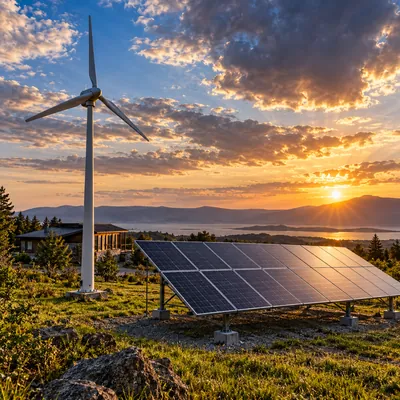
- Solar plus generator plus battery: PV supplies daytime energy and charges the battery; the generator covers long cloudy periods.
- Grid plus battery (plus PV): the battery provides backup and peak shaving, with the grid as the main source.
- Wind plus solar plus battery: complementary renewables, often with a backup generator; see our solar wind hybrid system guide.
The need for a hybrid energy system arises wherever a single source is either intermittent (solar, wind) or inefficient across the load range (engines). The battery acts as a buffer that decouples when energy is produced from when it is used, and a power conversion system and controller coordinate the flows.
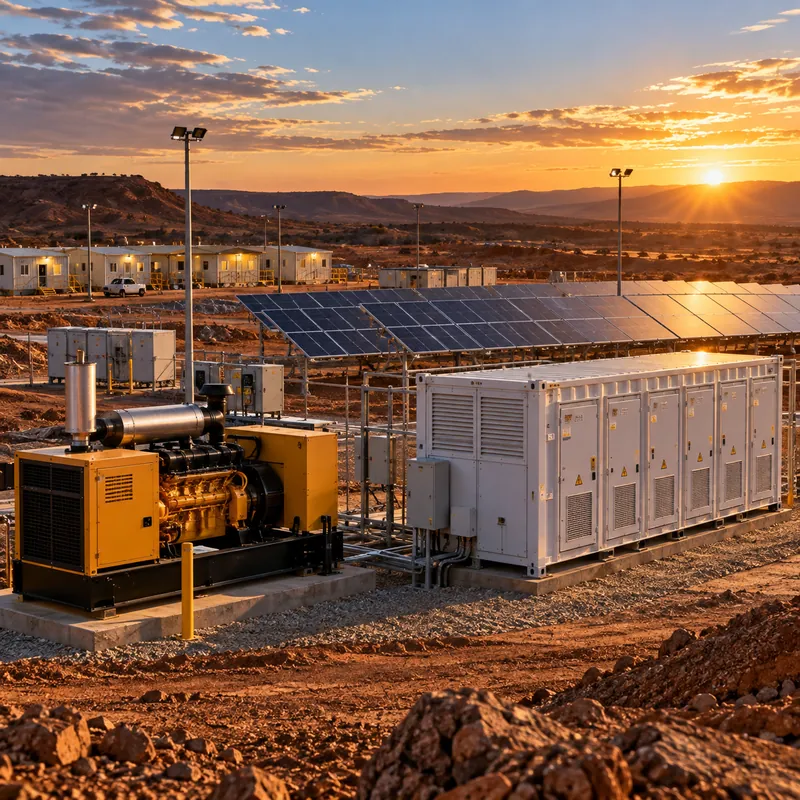
At household scale, the hybrid may be a hybrid inverter with a battery and a generator input. At industrial scale, it becomes a hybrid power plant: multi-MW generator sets, PV fields, battery containers and a microgrid controller, as described in our microgrid controller guide. The specific combination of generators with battery storage is also examined in hybrid generator battery systems.
Types of Power Generators for Home and Off-Grid Use
A power generator is a machine that converts mechanical energy, usually from a combustion engine, into electrical energy through an alternator. The main categories differ in output quality, fuel, noise and installation.
| Type | Typical output | Fuel | Characteristics | Best use |
|---|---|---|---|---|
| Portable open-frame | 2–10 kW | Gasoline, dual-fuel | Lowest cost, noisy, higher voltage distortion | Occasional outages, job sites |
| Inverter generator | 1–7 kW | Gasoline, propane | Variable engine speed, clean sine output, quieter, efficient at part load | Electronics, RV, light backup |
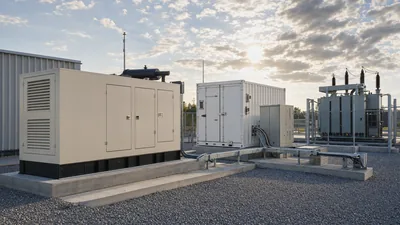
| Home standby | 8–26 kW | Natural gas, propane | Permanent, automatic start and transfer | Whole house backup power generator |
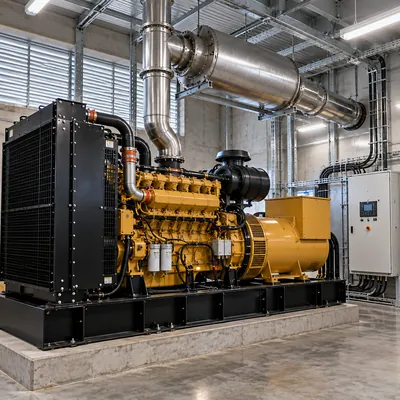
| Diesel genset | 10 kW–2 MW+ | Diesel | Durable, high torque, best full-load efficiency | Farms, remote sites, commercial standby |
| Battery "generator" | 0.3–5 kWh, 0.3–4 kW | Stored electricity | Silent, no emissions, limited energy | Essential loads, indoor use |
For off-grid living, the best generator is usually a propane or diesel unit sized so that it runs at 70–80% load while charging batteries, rather than one sized to the peak household load. An off grid propane generator avoids fuel degradation problems that affect stored gasoline and suits sites with an existing propane tank.
Battery-based units sold as battery powered generators for home use are portable power stations; they are compared with stationary systems in portable power station vs BESS.
What Size Generator Do You Need to Run a House?
Generator sizing must cover two values: the continuous running load and the starting surge of the largest motor that starts while others are running.
P_required = Σ P_running + (P_start,largest − P_run,largest)
Worked example
- Running loads: refrigerator 200 W, freezer 150 W, lighting 400 W, furnace blower 600 W, well pump 1,000 W, electronics 300 W. Total 2,650 W.
- Largest starting load: well pump with a start surge of about 3,000 W (3× running).
- Required:
2,650 + (3,000 − 1,000) = 4,650 W. - Add 20–25% margin for derating at altitude and temperature: about 5.8 kW. A 6–7 kW generator fits.
Whole-house coverage including central air-conditioning, an electric range or a water heater can push requirements to 15–26 kW. Soft starters on air-conditioning compressors can reduce surge significantly.
Generator output is often given in kVA. For single-phase, I = P / V; for three-phase, I = S / (√3 × V), where S is apparent power. Our generator kVA to amps calculator handles these conversions, and the full method, including motor locked-rotor codes, is in the generator sizing guide.
Why Do Generators Waste Fuel at Low Load?
A combustion engine has fixed losses: friction, pumping, cooling and alternator excitation, which consume fuel even with no electrical output. A widely used linear model for diesel generator fuel consumption is:
F (L/h) ≈ 0.08 × P_rated + 0.25 × P_out
with powers in kW. The first term is the no-load share, the second the incremental fuel per kWh. Diesel holds about 10 kWh of chemical energy per liter, so fuel efficiency at any load is η = P_out / (F × 10).
| Load on a 20 kW genset | Fuel (L/h) | Liters per kWh | Efficiency |
|---|---|---|---|
| 0 kW (idle) | 1.6 | n/a | 0% |
| 5 kW (25%) | 2.85 | 0.57 | 18% |
| 10 kW (50%) | 4.1 | 0.41 | 24% |
| 16 kW (80%) | 5.6 | 0.35 | 29% |
| 20 kW (100%) | 6.6 | 0.33 | 30% |
Figures are illustrative; actual fuel curves are on each genset's datasheet. Low-load operation also causes wet stacking in diesel engines, where unburned fuel and soot accumulate in the exhaust because cylinder temperatures are too low. Manufacturers typically recommend minimum loads of around 30% or periodic load-bank exercise.
Remote sites that size generators for peak load therefore spend most of their life in the inefficient region, which is the core argument for adding storage. Broader options for such sites are reviewed in off-grid power solutions.
Worked Example: Fuel Savings From a Battery Hybrid
Consider a remote site with a 5 kW average load, 24 hours a day (120 kWh/day), supplied by a 20 kW diesel generator sized for peaks.
Case 1: generator only
Fuel: (0.08 × 20 + 0.25 × 5) × 24 = 2.85 × 24 = 68.4 L/day. Engine hours: 24 per day.
Case 2: generator plus battery
- The generator runs at 16 kW (80%) when on: 5 kW to the load and 11 kW into the battery.
- Battery round-trip efficiency 92%, so each hour of running stores
11 × 0.92 = 10.1 kWhof deliverable energy. - Running time t must satisfy
10.1 × t = 5 × (24 − t), givingt = 120 / 15.1 ≈ 7.9 h. - Fuel:
(0.08 × 20 + 0.25 × 16) × 7.9 = 5.6 × 7.9 ≈ 44 L/day. - Battery cycled per day:
5 × 16.1 ≈ 80 kWh, so about 100 kWh usable capacity allows margin.
| Metric | Generator only | Generator + battery | Change |
|---|---|---|---|
| Fuel per day | 68 L | 44 L | −35% |
| Engine hours per day | 24 | 7.9 | −67% |
| Average engine load | 25% | 80% | Wet stacking avoided |
| Silent hours per day | 0 | 16 | Noise and emissions reduced |
Adding PV improves this further: 30 kW of panels at 4.5 PSH and 0.75 derate supply about 100 kWh/day on average, reducing generator running to bad-weather periods. Maintenance intervals are set by engine hours, so the two-thirds cut in hours also cuts oil changes and overhaul costs. Battery chemistry choice for daily cycling of this kind is discussed in our home generator battery guide.
How Do You Connect a Backup Power Generator Safely?
A generator must never be connected to building wiring by plugging into a receptacle (a "suicide cord"). That backfeeds the utility transformer, can energize lines that utility crews believe are dead, and exposes the cord's male pins.
Approved connection methods are:
- Manual transfer switch or a listed breaker interlock kit on the main panel, which mechanically prevents the main breaker and generator breaker being on at the same time.
- Automatic transfer switch (ATS), listed to UL 1008, which senses utility failure, starts the generator and transfers load. Standby generators normally include one.
- Hybrid inverter with generator input, which manages generator, battery and grid sources internally with its own transfer relay.
In the US, optional standby systems fall under NEC Article 702, which requires transfer equipment, correct grounding and bonding of the generator neutral (separately derived or not, depending on whether the transfer switch switches the neutral), and capacity for the loads supplied. Portable generators must also be placed outdoors, well away from windows and doors, because carbon monoxide is lethal.
Work on service equipment must follow local code and be done by a licensed electrician. For commercial facilities, design considerations for critical loads are covered in commercial backup power system design.
Next Steps: Specifying and Sourcing
For a home, specify the generator from a load list with running and starting watts, select fuel based on availability and storage, and include a UL 1008 transfer switch or listed interlock installed by a licensed electrician. Consider whether a battery with a hybrid inverter could cover most outages silently, with the generator as a second line.
For remote sites, farms, mines, telecom and construction, or for facilities seeking to cut diesel use, specify the hybrid as a system: 15-minute load profile, generator ratings and fuel curves, PV potential, required autonomy, battery usable kWh and power, grid-forming PCS capability, controller functions (generator start/stop by state of charge, minimum load management, peak shaving) and environmental conditions.
MARS does not manufacture generators. We manufacture the storage and power distribution equipment that turns a generator site into a hybrid: liquid-cooled LFP energy storage systems from 93–372 kWh cabinets to containerized systems of 500 kWh to 10 MWh with PCS, BMS/EMS and fire suppression, plus compact transformer substations and switchgear. Typical BESS lead time is 60–90 days with FAT welcome. Send your load and generator data through the quote request page.
Frequently asked questions
What is the difference between a hybrid power system and a generator?
A generator is a single source that must run whenever power is needed. A hybrid power system combines a generator with a battery and often solar, so the battery supplies power most of the time and the generator runs only at efficient load to recharge it, reducing fuel use, noise, emissions and maintenance.
What size generator do I need for home power outages?
Add the running watts of the loads you want to back up, then add the extra starting surge of the largest motor. Essential loads such as refrigeration, lights, furnace blower and a well pump typically need 5–8 kW. Whole-house backup with central air-conditioning commonly needs 15–26 kW.
Can a battery replace a backup generator?
For short outages and essential loads, yes. A 10–20 kWh battery with a hybrid inverter can run critical circuits for many hours and recharge from solar. For long outages, heavy loads such as electric heating, or sites without solar, a generator or a generator-plus-battery hybrid remains more practical.
What is the best generator for off-grid living?
Usually a diesel or propane generator sized so it runs at about 70–80% load while charging the battery bank, paired with solar and an inverter/charger with automatic generator start. This keeps the engine in its efficient range, avoids wet stacking and minimizes run hours compared with a large generator running continuously.
How much fuel does a battery hybrid save?
Savings depend on how lightly loaded the generator was. For a generator previously running continuously at 25% load, adding a battery so the engine runs at 80% load for shorter periods commonly reduces fuel by roughly a third and engine hours by about two-thirds, with larger savings when solar is added.
Do I need a transfer switch for a portable generator?
Yes, if the generator will supply any circuits through the building wiring. A manual transfer switch or listed main-breaker interlock prevents backfeeding the utility. Running appliances directly from the generator's outlets with suitable extension cords does not require one, but the generator must stay outdoors away from openings.
Written and reviewed by the MARS application engineering team in Shanghai, who specify and test transformers, switchgear, substations and battery storage for projects in 40+ countries. Last updated .
Tags: hybrid power system power generator backup power generator off grid generator hybrid renewable energy systems