Key takeaways
- Heat removed by a coolant follows Q = ṁ × cp × ΔT; an 80 kW rack at a 10 K water temperature rise needs about 1.9 kg/s, or roughly 115 litres per minute.
- Conventional air cooling is commonly limited to roughly 15 to 25 kW per rack, while direct-to-chip and immersion systems are deployed at 50 to over 100 kW per rack.
- ASHRAE liquid cooling classes W17, W27, W32, W40, W45 and W+ define facility water supply temperature limits from 17 °C up to above 45 °C.
- A coolant distribution unit isolates the technology cooling loop from facility water, controls flow and temperature, and must be on uninterruptible power to avoid thermal trips.
- Power usage effectiveness, defined in ISO/IEC 30134-2 as total facility energy divided by IT energy, typically improves when fans and chillers are reduced by liquid cooling.
Quick answer: Data center liquid cooling removes server heat with water or dielectric fluid instead of air, using rear-door heat exchangers, direct-to-chip cold plates or immersion tanks. Because water carries about 3,500 times more heat per unit volume than air, liquid cooling supports rack densities of 50–100 kW and more, cuts fan energy and allows warmer facility water for economiser cooling.
Accelerated computing has pushed server rack power from single-digit kilowatts to tens and, in some halls, beyond 100 kW. Air simply cannot carry that much heat through a rack without impractical airflow and noise. Liquid cooling in data centers has therefore moved from niche high-performance computing to mainstream design.
This guide is for facility engineers, data center developers and electrical designers who need to understand the main liquid cooling methods, how to size coolant flow, what the standards say about water temperatures, and how liquid cooling changes the electrical system: transformers, switchgear, UPS and battery storage. MARS supplies the power side, not cooling equipment, and the guide is written neutrally on cooling technology.
What Is Data Center Liquid Cooling?
Data center liquid cooling is any method that transfers heat from IT equipment into a liquid, rather than into room air, close to the heat source. The liquid then rejects that heat through a heat exchanger to facility water, a dry cooler or a cooling tower.
The physics explains the shift. Volumetric heat capacity of water is about 4.18 MJ/(m³·K); for air at room conditions it is about 1.2 kJ/(m³·K). A litre of water absorbs roughly 3,500 times more heat than a litre of air for the same temperature rise. Liquids also have far higher heat transfer coefficients at a cold plate surface, so chips run cooler at the same coolant temperature.
The practical benefits are:
- Density: racks of 50–100 kW or more in the same footprint as a 10 kW air-cooled rack.
- Energy: lower server fan power and fewer computer room air handlers.
- Warmer water: supply temperatures of 30–45 °C allow free cooling with dry coolers in many climates, reducing chiller hours.
- Heat reuse: return water warm enough for district heating or process use.
The trade-offs are leak risk, fluid management, new maintenance skills and tighter coordination between mechanical and electrical design. Many facilities run hybrid designs, with liquid capturing 70–80% or more of rack heat and residual air cooling handling memory, storage and power supplies.
Types of Liquid Cooling in Data Centers
| Method | How it works | Typical rack density | Fluid at IT | Notes |
|---|---|---|---|---|
| Rear-door heat exchanger (passive or active) | Water coil on rack door cools exhaust air | Up to about 30–50 kW | None (air-cooled servers) | Easiest retrofit, no server changes |
| Direct-to-chip, single-phase | Cold plates on CPUs/GPUs with water-glycol loop | 50–100+ kW | Water or water-glycol | Most common for accelerated computing |
| Direct-to-chip, two-phase | Refrigerant boils in cold plate | Very high | Dielectric refrigerant | Low flow rates, refrigerant handling |
| Single-phase immersion | Servers submerged in dielectric oil or synthetic fluid | 50–100+ kW per tank | Dielectric liquid | Removes nearly all heat, needs tank-compatible hardware |
| Two-phase immersion | Fluid boils on components, condenses on coil | Very high | Engineered dielectric fluid | High heat flux, fluid cost and regulation questions |
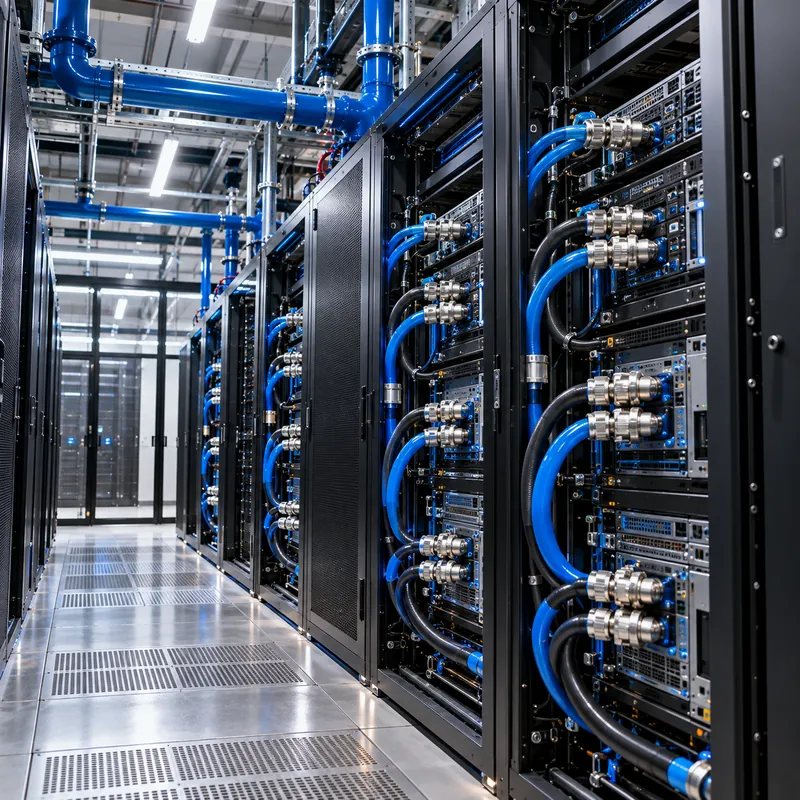
A liquid cooled server rack usually means a direct-to-chip design: the rack carries supply and return manifolds with dripless quick-disconnects to each server, fed from an in-row or in-rack coolant distribution unit. A liquid cooled server cabinet may also mean an enclosed cabinet with an integral heat exchanger and fans, sealed from room air, which suits edge sites and harsh environments.
Immersion uses no server fans at all and is less sensitive to ambient conditions, but it changes how hardware is serviced and requires compatible cables, labels and materials.
How Do You Size Coolant Flow for a Liquid Cooled Rack?
Coolant flow comes from the steady-flow energy balance:
Q = ṁ × cp × ΔT, so ṁ = Q / (cp × ΔT)
where Q is heat in kW, ṁ is mass flow in kg/s, cp is specific heat in kJ/(kg·K) and ΔT is the coolant temperature rise in K.
Worked example, water: an 80 kW direct-to-chip rack captures 100% of its heat in water (cp 4.18), with a 10 K rise.
ṁ = 80 / (4.18 × 10) = 1.91 kg/s, about 115 L/min (30 US gpm).
A 25% propylene glycol mix has lower cp (about 3.9) and higher viscosity, so flow rises to roughly 2.05 kg/s and pump head increases.
Same rack, air: air cp is 1.005 kJ/(kg·K), density about 1.2 kg/m³, and a 12 K rise is typical.
ṁ = 80 / (1.005 × 12) = 6.63 kg/s, or 6.63 / 1.2 = 5.5 m³/s, roughly 11,700 CFM through one rack.
Moving that much air through a 600 mm wide rack is impractical, which is why densities this high are liquid cooled.
Sizing steps for a hall:
- Establish IT load per rack and the fraction captured by liquid.
- Choose supply temperature class and design ΔT with the server vendor.
- Calculate flow per rack and per CDU, adding 10–20% margin.
- Size CDU heat exchanger approach temperature and pump head including manifolds and quick-disconnects.
- Size facility water loop, heat rejection and residual air cooling.
ASHRAE Water Classes and Coolant Distribution Units
Liquid-cooled facilities normally have two loops. The technology cooling system (TCS) runs through the racks with tightly controlled water quality. The facility water system (FWS) carries heat to chillers, dry coolers or towers. A coolant distribution unit (CDU) is the heat exchanger, pumps, filtration and controls that separate and manage these loops.
| ASHRAE class | Facility water supply temperature | Typical heat rejection |
|---|---|---|
| W17 | ≤ 17 °C | Chillers, with some economiser hours |
| W27 | ≤ 27 °C | Chillers plus water-side economiser |
| W32 | ≤ 32 °C | Mostly economiser, chillers as trim |
| W40 | ≤ 40 °C | Dry coolers or towers, chiller-free in many climates |
| W45 | ≤ 45 °C | Dry coolers, heat reuse potential |
| W+ | > 45 °C | Heat reuse focused |
Higher classes cut cooling energy but require hardware validated for warm water. CDU selection points include capacity in kW at a stated approach temperature, redundancy (N+1 pumps is common), filtration to the server vendor's micron requirement, leak detection, and controls integration with the building management system.
Water quality, materials compatibility and commissioning flushes are often underestimated. Contamination or corrosion products can block microchannel cold plates within weeks.
The same thermal principles apply to liquid-cooled battery storage, where cold plates under LFP cells keep temperature spread within a few kelvin; see battery thermal management.
How Does Liquid Cooling Change Data Center Power Design?
Liquid cooling shifts load between electrical systems as well as mechanical ones. Key effects:
- Higher power per rack: 80–130 kW racks push distribution toward 415/240 V or 480/277 V to the rack, overhead busway and higher-rated rack power distribution units. See data center power distribution and bus duct and busway.
- Cooling on critical power: a CDU pump stop can overheat chips in seconds to minutes, so CDUs and controls usually sit on UPS. Chillers and dry coolers may need short ride-through on UPS or fast restart after generator transfer.
- Different load profile: fewer CRAH fans but more pumps; motors and their drives add harmonic current.
- Transformer loading: large non-linear IT loads favour K-rated or harmonic-mitigating transformers; see K-factor transformers and transformers for data centers.
Example impact on PUE: PUE is total facility energy divided by IT energy (ISO/IEC 30134-2). If a 2 MW IT hall uses 0.6 MW for cooling and 0.15 MW for other overhead, PUE is (2 + 0.6 + 0.15) / 2 = 1.38. If liquid cooling with warm water cuts cooling to 0.3 MW, PUE becomes (2 + 0.3 + 0.15) / 2 = 1.23. These figures are illustrative; actual results depend on climate and design.
Accelerated computing loads can also swing tens of percent within seconds, which stresses generators and utility connections. Battery storage at the facility level can buffer those swings and provide ride-through, as discussed in the server battery backup engineering guide.
How to Evaluate Data Center Cooling Companies and Systems
Data center cooling companies and manufacturers range from CDU and cold-plate specialists to immersion tank suppliers and full mechanical contractors. Rather than chasing the best data center cooling systems by reputation, evaluate proposals on engineering criteria:
- Hardware qualification: is the cooling method validated by the server or accelerator vendor at your target supply temperature and flow?
- Thermal performance: CDU capacity at stated approach temperature, pressure drop at design flow, and redundancy.
- Leak management: dripless connectors, leak detection cable or sensors, automatic isolation valves and negative-pressure options.
- Fluid lifecycle: water treatment, glycol monitoring, dielectric fluid replacement intervals and disposal.
- Controls: integration with BMS and DCIM, alarm handling, and behaviour on loss of power.
- Serviceability: hot-swap pumps and filters, spares, local service capability.
- Standards: ASHRAE TC 9.9 guidance, electrical safety of CDUs to the applicable IEC or UL product safety standard, and local pressure equipment rules.
Request a factory test report for each CDU and witness at least one unit where possible. Commissioning should include flushing, pressure testing, flow balancing per rack and a controlled loss-of-power test to confirm the CDU restarts correctly on UPS or generator.
Next Steps: Specifying and Sourcing the Power Side
Liquid cooling projects succeed when mechanical and electrical teams freeze rack density, cooling loads and critical-power boundaries together. For the electrical RFQ, define:
- IT load per hall and per rack, with expected load swing rates
- Cooling plant load split between UPS-backed (CDUs, controls) and generator-backed (chillers, dry coolers)
- Distribution voltage, transformer K-factor or harmonic requirements, and short-circuit levels
- Ride-through time and whether a BESS will provide UPS support, peak shaving or grid services
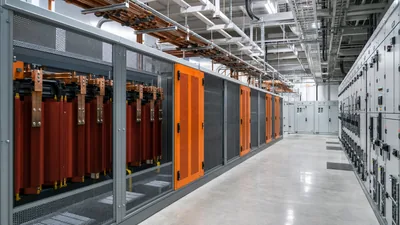
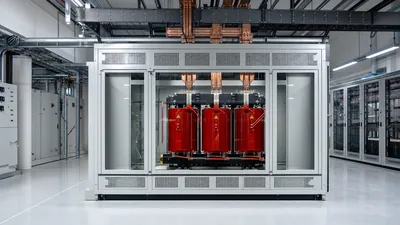
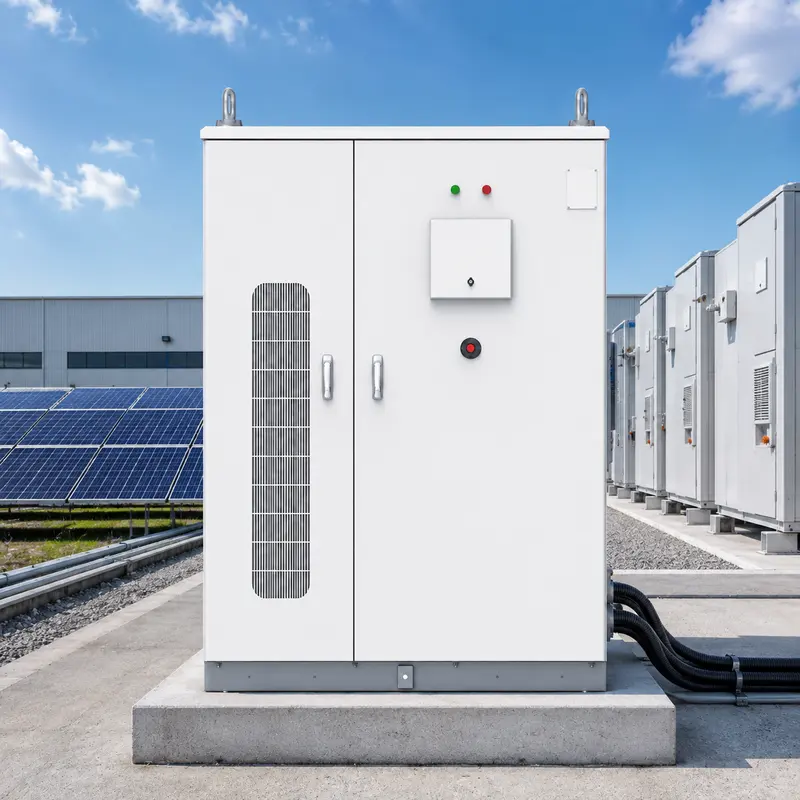
MARS manufactures cast-resin dry-type transformers for indoor data hall distribution, KYN28 MV switchgear, IEC 61439 LV switchboards, and LFP storage including liquid-cooled ESS cabinets of 93–372 kWh and containerised systems up to 10 MWh with PCS and BMS/EMS. Distribution transformers and switchgear typically ship in 25–45 days and BESS in 60–90 days, with FAT available.
Send your single-line diagram and load schedule through the quote request page.
Frequently asked questions
What is liquid cooling in a data center?
Liquid cooling in a data center removes heat from servers using water, water-glycol or a dielectric fluid instead of room air. Heat is captured at cold plates on processors, at a rear-door coil or by immersing servers in fluid, then rejected through a coolant distribution unit to facility water and dry coolers, cooling towers or chillers.
At what rack density is liquid cooling needed?
Conventional air cooling is commonly limited to roughly 15 to 25 kW per rack, with containment and high-capacity air handling pushing somewhat higher. Above about 30 to 40 kW, rear-door heat exchangers or direct-to-chip cooling become practical necessities, and racks of 80 kW or more are almost always liquid cooled.
Is immersion cooling better than direct-to-chip cooling?
Each suits different needs. Direct-to-chip is the most widely deployed for accelerated computing because it fits standard racks and serviceable servers. Immersion removes nearly all heat and eliminates fans but needs compatible hardware, tank space and fluid management. Selection depends on hardware support, density, maintenance model and facility layout.
What is a CDU in liquid cooling?
A coolant distribution unit is equipment that separates the rack cooling loop from facility water using a heat exchanger, and pumps, filters and controls the coolant supplied to the racks. It regulates supply temperature and flow, detects leaks and alarms, and is usually fed from uninterruptible power so cooling continues during power events.
Does liquid cooling reduce data center energy use?
Usually yes. Liquid cooling lowers server fan power and air handling energy and allows warmer facility water, which increases economiser hours and reduces chiller use. That typically improves power usage effectiveness, defined in ISO/IEC 30134-2. Pump energy increases, so the net saving depends on climate, water temperature class and design.
How much water flow does a liquid cooled server rack need?
Use flow = heat / (specific heat × temperature rise). An 80 kW rack with water and a 10 K rise needs about 1.9 kg/s, roughly 115 litres per minute or 30 US gallons per minute. Glycol mixtures and smaller temperature rises increase the required flow and pump head.
Written and reviewed by the MARS application engineering team in Shanghai, who specify and test transformers, switchgear, substations and battery storage for projects in 40+ countries. Last updated .
Tags: data center liquid cooling liquid cooling in data centers liquid cooled server rack liquid cooled server cabinet data center cooling manufacturers