Key takeaways
- Real power in kW equals apparent power in kVA multiplied by power factor, so 1 kVA equals 0.8 kW at the standard generator power factor of 0.8.
- Apparent, real and reactive power form a right triangle where kVA squared equals kW squared plus kvar squared.
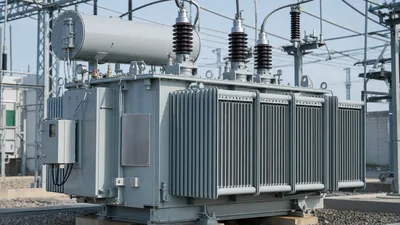
- IEC 60076-1 and IEEE C57.12.00 rate transformers in kVA because winding losses depend on current regardless of the connected load power factor.
- Improving a 400 kW load from PF 0.82 to 0.95 reduces demand from 488 kVA to 421 kVA and needs about 148 kvar of capacitors.
- Watts convert to kVA by dividing by 1,000 and by power factor, so 7,200 W at PF 0.9 equals 8 kVA.
Quick answer: kVA vs kW: kVA (kilovolt-amperes) is apparent power, the total current-carrying capacity a source must provide; kW (kilowatts) is real power that does work. They are linked by power factor: kW = kVA × PF. At the common generator rating of PF 0.8, 100 kVA equals 80 kW. Transformers are sized in kVA because their heating depends on current, not on load power factor.
Equipment catalogs quote transformers and generators in kVA, motors and heaters in kW, and utility bills in kWh, sometimes with a kVA demand charge on top. Treating the two units as interchangeable is the classic sizing error: a site whose load adds up to 800 kW can overload a 900 kVA transformer if its power factor is poor.
This guide explains the kVA and kW difference at the level an engineer needs for sizing and procurement: the power triangle, conversion formulas in both directions, a reference chart, the reasons behind each rating convention and a worked power factor correction calculation.
What Is a Kilovolt-Ampere and How Does It Differ from a Kilowatt?
A kilovolt-ampere (kVA) is 1,000 volt-amperes of apparent power, the product of RMS voltage and RMS current. A kilowatt (kW) is 1,000 watts of real power, the portion of that product that is converted into heat, light or motion. A kilovar (kvar) is the reactive part, current that oscillates between source and load magnetic or electric fields without doing net work.
The three quantities form the power triangle:
kVA² = kW² + kvar²PF = kW / kVA = cos φfor sinusoidal waveformskvar = kW × tan φ
Is kVA the same as kW? Only at unity power factor. A bank of electric heaters at PF 1.0 draws 50 kW and 50 kVA. A machine shop with induction motors at PF 0.8 drawing 50 kW actually requires 62.5 kVA of source capacity, and the extra 37.5 kvar circulates through every cable, breaker and transformer winding.
The same distinction applies at the small scale of volt-amperes and watts, covered for UPS and control transformers in volt amps vs watts. At distribution scale, the consequences are larger: kVA sets the transformer frame size, the switchgear current rating and in many tariffs the monthly demand charge.
How to Convert kVA to kW and kW to kVA
The conversion formulas are simple once the power factor is known.
| Conversion | Formula | Example |
|---|---|---|
| kVA to kW | kW = kVA × PF | 25 kVA × 0.8 = 20 kW |
| kW to kVA | kVA = kW / PF | 45 kW / 0.9 = 50 kVA |
| Watts to kVA | kVA = W / (1,000 × PF) | 7,200 W / (1,000 × 0.9) = 8 kVA |
| kVA to watts | W = kVA × 1,000 × PF | 1 kVA × 1,000 × 0.8 = 800 W |
| kVA from current (3-ph) | kVA = √3 × V × I / 1,000 | 1.732 × 400 × 100 / 1,000 = 69.3 kVA |
- Obtain the load's real power in kW from nameplates or measurement.
- Determine power factor: measured, from data sheets, or a conservative assumption (0.8 for mixed industrial, 0.9 to 0.95 for modern commercial with LED and drives).
- Divide kW by PF to get kVA, or multiply kVA by PF to get kW.
- For three-phase sizing, convert kVA to current with
I = kVA × 1,000 / (√3 × V)to check breakers and busbars.
1 kVA in watts: 1 kVA is 1,000 VA, which delivers 1,000 W at PF 1.0, 900 W at PF 0.9 and 800 W at PF 0.8. 25 kVA in kW: 20 kW at PF 0.8, 22.5 kW at PF 0.9. A kVA to kW calculator does nothing more than this multiplication; its value lies in forcing you to enter PF explicitly. For the current side of the calculation, see the kW to amps guide.
kW to kVA Chart at Common Power Factors
This kW to kVA chart gives the apparent power a source must supply for a given real load. Read across to your power factor, then round up to the next standard transformer or generator rating.
| Real load (kW) | PF 1.0 (kVA) | PF 0.95 | PF 0.9 | PF 0.85 | PF 0.8 | PF 0.7 |
|---|---|---|---|---|---|---|
| 10 | 10 | 10.5 | 11.1 | 11.8 | 12.5 | 14.3 |
| 20 | 20 | 21.1 | 22.2 | 23.5 | 25 | 28.6 |
| 40 | 40 | 42.1 | 44.4 | 47.1 | 50 | 57.1 |
| 80 | 80 | 84.2 | 88.9 | 94.1 | 100 | 114 |
| 200 | 200 | 211 | 222 | 235 | 250 | 286 |
| 400 | 400 | 421 | 444 | 471 | 500 | 571 |
| 800 | 800 | 842 | 889 | 941 | 1,000 | 1,143 |
| 1,600 | 1,600 | 1,684 | 1,778 | 1,882 | 2,000 | 2,286 |
The chart shows why power factor matters for capital cost. An 800 kW load at PF 0.95 fits within a 1,000 kVA transformer with 16 percent headroom; at PF 0.7 it needs 1,143 kVA, forcing a step to 1,250 kVA. Standard IEC distribution sizes run 100, 160, 200, 250, 315, 400, 500, 630, 800, 1,000, 1,250, 1,600, 2,000 and 2,500 kVA; IEEE sizes run 75, 112.5, 150, 225, 300, 500, 750, 1,000, 1,500, 2,000 and 2,500 kVA.
Choosing among these sizes after diversity and growth allowances is detailed in the transformer kVA sizing guide.
Why Are Transformers Rated in kVA and Motors in kW?
Each rating convention reflects what limits the equipment.
- Transformers are limited by temperature rise. Load loss is I²R in the windings and depends on current; no-load loss depends on voltage and frequency. Neither depends on the power factor of the downstream load, so the manufacturer cannot promise kW. IEC 60076-1 defines rated power in kVA, and the explanation is expanded in why transformers are rated in kVA.
- Generators carry a dual limit. The engine limits kW (mechanical power); the alternator winding limits kVA (current). Standby sets are usually rated in kVA at PF 0.8, so a 500 kVA generator delivers 400 kW. Sizing the alternator from current is explained in generator kVA to amps.
- UPS systems show both, for example 100 kVA / 90 kW at output PF 0.9.
- Motors are rated in kW (or hp) of mechanical shaft output because that is what the driven machine needs. Electrical input kVA is higher by both efficiency and power factor:
kVAin = kWout / (η × PF). - Heaters and resistive loads are rated in kW because kW and kVA are equal.
When a specification mixes these conventions, convert everything to kVA at the point of supply before summing. Adding motor kW directly to transformer kVA is the commonest error in load schedules.
Worked Example: Power Factor Correction and kVA Demand
A plant has a measured demand of 400 kW at PF 0.82 on a 400 V, 50 Hz system fed by a 500 kVA transformer. The owner wants to add 60 kW of new load without replacing the transformer.
Step 1: existing kVA. 400 / 0.82 = 488 kVA. The transformer is at 98 percent of rating, so the new load cannot be added as is.
Step 2: target kVA after correction to PF 0.95. 400 / 0.95 = 421 kVA.
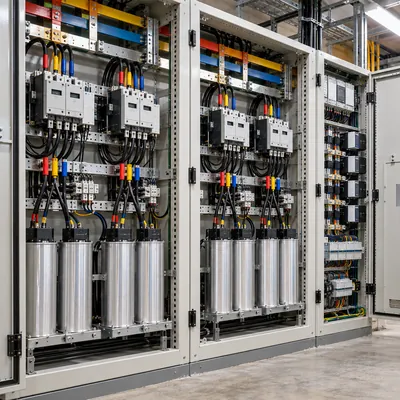
Step 3: capacitor size. kvar = kW × (tan φ1 − tan φ2). With tan(acos 0.82) = 0.698 and tan(acos 0.95) = 0.329: 400 × (0.698 − 0.329) = 148 kvar. A 150 kvar automatic capacitor bank in 25 kvar steps is a practical choice; if drives are present, use detuned reactors (typically 7 percent) to avoid harmonic resonance.
Step 4: add the new load. Total real power becomes 460 kW. At PF 0.95: 460 / 0.95 = 484 kVA, back within the 500 kVA rating but with little margin. Line current drops from 488,000 / (1.732 × 400) = 704 A before correction to 699 A after expansion, so the existing LV incomer still works.
The correction released about 67 kVA. For long-term growth, a 630 kVA transformer would restore headroom. Background on displacement and distortion power factor is in our power factor explainer.
Converting Watts to kVA for Small Loads
Single equipment items and small panels are often specified in watts. Converting watts to kVA uses the same formula with an extra factor of 1,000: kVA = W / (1,000 × PF).
| Equipment | Watts | Typical PF | kVA |
|---|---|---|---|
| LED lighting panel, 120 luminaires | 4,800 W | 0.95 | 5.05 kVA |
| Server rack with PFC supplies | 7,200 W | 0.98 | 7.35 kVA |
| Air compressor, 7.5 kW motor | 8,300 W input | 0.85 | 9.76 kVA |
| Welding transformer | 12,000 W | 0.6 | 20 kVA |
| Electric oven | 15,000 W | 1.0 | 15 kVA |
The welding example shows the danger of using watts alone: a 12 kW welder looks smaller than a 15 kW oven but demands 33 percent more supply capacity. Conversely, a server rack with active PFC has almost identical watts and VA.
When the load is known only by its current, skip watts entirely and calculate kVA directly from amps; our amps to kVA conversion guide covers single and three-phase cases.
kVA and kW on the Electricity Bill
Energy meters record kWh, the integral of real power over time. Many commercial and industrial tariffs also charge for maximum demand, either in kW or in kVA, and some add a reactive energy charge in kvarh when power factor falls below a threshold, often 0.9 or 0.95.
Where demand is billed in kVA, poor power factor costs money every month even though it does not increase kWh. Using the example above, a plant at 488 kVA demand that corrects to 421 kVA reduces its billed demand by about 14 percent with no change in production.
Key points for facility managers:
- Check whether your tariff bills kW or kVA demand; the payback of capacitor banks depends on it.
- Correct as close to the load as practical, at motor control centers or main LV boards, to also reduce cable losses.
- Avoid overcorrection to leading PF at light load; automatic stepped banks prevent it.
- Battery energy storage with a four-quadrant PCS can supply reactive power as well as peak-shave kW demand.
For a site already near transformer capacity, shaving the peak with a battery system can defer an upgrade. The how to determine kVA guide explains how to establish the real peak from interval data before deciding.
Next Steps: Specifying and Sourcing Transformers by kVA
To specify a transformer correctly from a kW-based load list:
- Convert each load to kVA at its own PF, then apply demand and diversity factors.
- Allow 20 to 25 percent for growth, and check whether the site will add power factor correction.
- Specify the transformer in kVA with voltages, frequency, vector group, impedance, cooling (ONAN, ONAF, AN, AF) and the standard (IEC 60076 or IEEE C57.12.00).
- State any harmonic load content so the manufacturer can confirm thermal margin.
MARS manufactures oil-immersed transformers and dry-type units from small distribution ratings to 31,500 kVA power transformers, plus energy storage systems for demand management. Use the transformer sizing calculator to confirm the rating, then request a proposal via the quote page.
Frequently asked questions
Is kVA the same as kW?
No. kVA is apparent power and kW is real power. They are equal only when power factor is 1.0, as with resistive heaters. For motor and mixed loads, kW equals kVA multiplied by power factor, so a 100 kVA supply at PF 0.8 delivers 80 kW of useful power.
How do I convert kVA to kW?
Multiply kVA by the power factor. For example, 250 kVA at PF 0.8 equals 200 kW, and 250 kVA at PF 0.9 equals 225 kW. If power factor is unknown for generator sizing, the industry convention is 0.8. For transformers, use the measured or expected load power factor.
What is 1 kVA in kW?
1 kVA equals 1 kW at unity power factor, 0.9 kW at PF 0.9 and 0.8 kW at PF 0.8. In watts, 1 kVA is 800 to 1,000 W depending on the load. The kVA figure is the current-carrying limit; the kW figure is the useful power delivered.
How do you convert watts to kVA?
Divide watts by 1,000 to get kW, then divide by the power factor. For example, 4,500 W at PF 0.9 equals 4.5 kW divided by 0.9, which is 5 kVA. For resistive loads at PF 1.0, kVA is simply watts divided by 1,000.
Why are generators rated in kVA instead of kW?
The alternator windings are limited by current, which depends on kVA, while the engine is limited by kW. Manufacturers state kVA at a standard 0.8 power factor so users can see both limits: a 500 kVA generator delivers up to 400 kW. Loads with PF below 0.8 reduce usable kW further.
What is the difference between kW and kVA on a transformer?
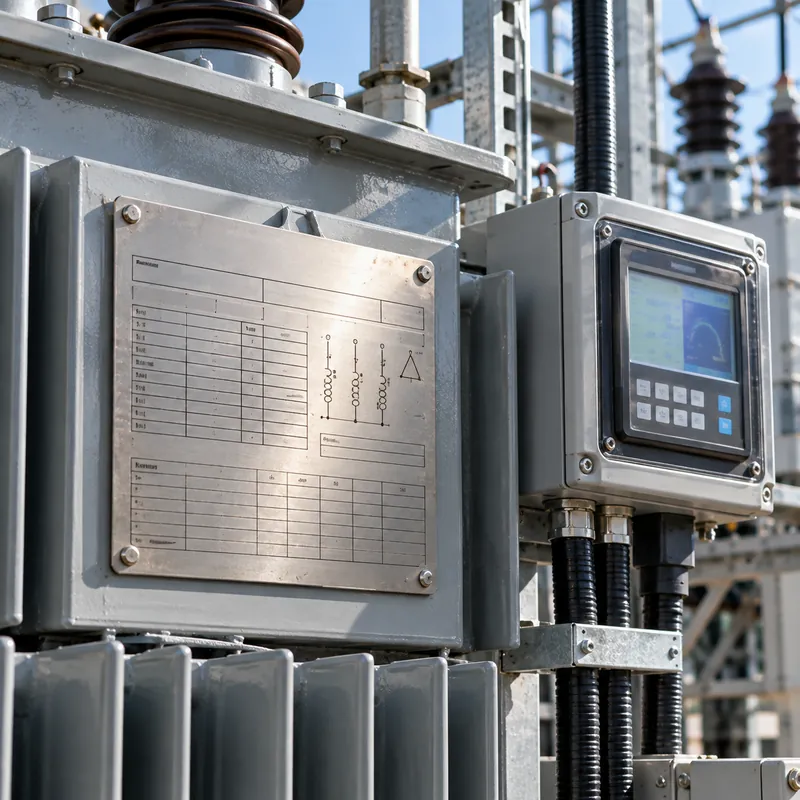
A transformer nameplate shows only kVA because its heating depends on current and voltage, not on the load power factor. The kW it can deliver equals kVA times the load PF, so a 1,000 kVA transformer supplies 900 kW at PF 0.9 or 800 kW at PF 0.8 without exceeding its rating.
Written and reviewed by the MARS application engineering team in Shanghai, who specify and test transformers, switchgear, substations and battery storage for projects in 40+ countries. Last updated .
Tags: kva vs kw kva to kw calculator kw to kva conversion what is kilovolt ampere is kva the same as kw